
 English
 中文简体
中文简体 Español
What Is PHA Coating for Food and Beverage Packaging — and Should You Care?
Content
- 1 What Exactly Is PHA and How Does It Work as a Coating?
- 2 Why the Food and Beverage Packaging Industry Needs PHA Coating
- 3 How PHA Coating Performs as a Barrier Material
- 4 PHA Coating vs. PE Coating vs. PLA Coating: A Direct Comparison
- 5 Real-World Applications of PHA Coating in Food and Beverage Packaging
- 6
- 7 Certifications That Matter for PHA-Coated Packaging
- 8 Current Limitations and Challenges of PHA Coating
- 9 How to Source and Specify PHA Coating for Your Packaging
- 10 The Regulatory Tailwind Behind PHA Coating Adoption
What Exactly Is PHA and How Does It Work as a Coating?
PHA stands for polyhydroxyalkanoate, a family of naturally occurring biopolymers produced by bacteria during fermentation of organic feedstocks such as plant sugars, vegetable oils, or even food waste streams. Unlike conventional plastics derived from petrochemicals, PHA is synthesized entirely by living microorganisms, making it one of the few truly bio-based and biodegradable materials available at commercial scale today.
When used as a coating on food and beverage packaging, PHA is applied as a thin film — typically between 10 and 30 microns thick — onto a substrate such as paperboard, kraft paper, or molded fiber. The coating bonds to the surface and creates a functional barrier layer that protects the underlying material from moisture, grease, and oxygen. This is the same fundamental role that polyethylene (PE) coatings have played on paper cups, food trays, and cartons for decades — except that PHA-based coatings are designed to be compostable and, in some formulations, home-biodegradable, without leaving behind persistent microplastics.
The most commercially relevant PHA variants used in food packaging coatings include PHB (polyhydroxybutyrate), PHBV (polyhydroxybutyrate-co-valerate), and PHB4B (polyhydroxybutyrate-co-4-hydroxybutyrate). Each variant offers a slightly different balance of flexibility, barrier performance, melting point, and biodegradation speed. PHBV, for instance, is more flexible and less brittle than pure PHB, making it better suited to coatings that need to flex without cracking when paper is folded, scored, or creased during packaging production.
Why the Food and Beverage Packaging Industry Needs PHA Coating
The food packaging industry has relied on thin plastic coatings for most of the twentieth century because they solve a real and stubborn engineering problem: paper and fiber absorb liquids, grease, and odors, making them unsuitable on their own for direct food contact without a protective barrier. PE coating solved this brilliantly — but at an enormous environmental cost. PE-coated paper cannot be recycled in standard paper streams and is not biodegradable. The coating contaminates the paper fiber during pulping, making the whole package a waste management problem.
PLA (polylactic acid) coatings emerged as the first widely adopted bio-based alternative, and they remain popular on coffee cups, cold drink containers, and food service packaging. However, PLA has a significant drawback: it only degrades under the high-heat conditions of industrial composting facilities (typically above 58°C for sustained periods), and it does not biodegrade in home compost, soil, or marine environments within any practical timeframe. This means PLA-coated packaging, despite its bio-based origin, often ends up in landfill where it behaves much like conventional plastic.
PHA coating addresses this gap directly. Certified PHA coatings can biodegrade in industrial compost, home compost, soil, and — critically — marine environments. This makes PHA-coated food and beverage packaging genuinely end-of-life flexible in a way that neither PE nor PLA can match. For brands navigating tightening extended producer responsibility (EPR) legislation in the EU, UK, and North America, PHA coating represents a credible path to packaging that is both functionally protective and environmentally resolvable.
How PHA Coating Performs as a Barrier Material
Performance is the first question any packaging buyer or food brand will ask, and rightly so. A coating that biodegrades but fails to protect the food is not a viable solution. Here is how PHA coating measures up across the key barrier properties:
Moisture and Water Vapor Barrier
PHA coatings offer moderate-to-good water vapor transmission rate (WVTR) performance. Pure PHB has a relatively low WVTR — meaning it passes less moisture through — making it suitable for dry food applications like snack packaging, bakery bags, and dry goods pouches. PHBV blends offer slightly higher WVTR but can be tuned through coating weight and blend ratios. For liquid-contact applications such as hot cup liners or soup container coatings, PHA is often used in combination with other barrier layers or at higher coating weights to achieve the necessary liquid holdout.
Grease and Oil Resistance
PHA coatings perform well against grease and oil, making them suitable for fast food wrappers, pizza boxes, fry containers, and burger clamshells. Unlike PFAS-based grease barriers — which are now being phased out across the EU and US due to their "forever chemical" status — PHA provides grease resistance without introducing persistent fluorinated compounds into the food chain or environment. This makes PHA-coated packaging a strong candidate for replacing PFAS-treated paper in food service applications.
Oxygen Barrier
The oxygen barrier of PHA coatings is moderate when used alone but can be enhanced through multi-layer constructions combining PHA with natural mineral coatings or other biopolymer layers. For fresh produce, ready-meal trays, or MAP (modified atmosphere packaging) applications where a strong oxygen barrier is essential to shelf life, standalone PHA coatings may not be sufficient — but PHA as one layer in a multilayer bio-based stack is a growing area of development.
Heat Resistance and Seal Performance
PHA coatings are heat-sealable, which is important for packaging lines that use heat-seal machinery to close pouches, trays, or cartons. The melting point of PHBV ranges from approximately 140°C to 170°C depending on the valerate content, which is compatible with standard food packaging converting equipment. PHA coatings also tolerate the temperatures encountered in hot-fill applications (typically 85–95°C), though prolonged exposure to boiling liquids may degrade performance over time.
PHA Coating vs. PE Coating vs. PLA Coating: A Direct Comparison
To understand where PHA fits in the landscape of food packaging coatings, it helps to compare it directly with its main alternatives:
|
Property |
PE Coating |
PLA Coating |
PHA Coating |
|
Bio-based origin |
No (fossil-based) |
Yes (corn/sugarcane) |
Yes (bacterial fermentation) |
|
Industrial compostable |
No |
Yes |
Yes |
|
Home compostable |
No |
No |
Yes (certified grades) |
|
Marine biodegradable |
No |
No |
Yes (certified grades) |
|
Paper recyclability |
Contaminates paper stream |
Contaminates paper stream |
Dispersible in some mills |
|
Moisture barrier |
Excellent |
Good |
Good to moderate |
|
Grease resistance |
Excellent |
Good |
Good |
|
Cost vs. PE |
Baseline (low) |
1.5–2x higher |
2–4x higher (currently) |
|
Regulatory trajectory |
Under pressure (SUP bans) |
Scrutiny on end-of-life claims |
Favorable |
Real-World Applications of PHA Coating in Food and Beverage Packaging
PHA coating is no longer purely a laboratory curiosity. It has moved into commercial use across a growing range of food and beverage packaging formats:
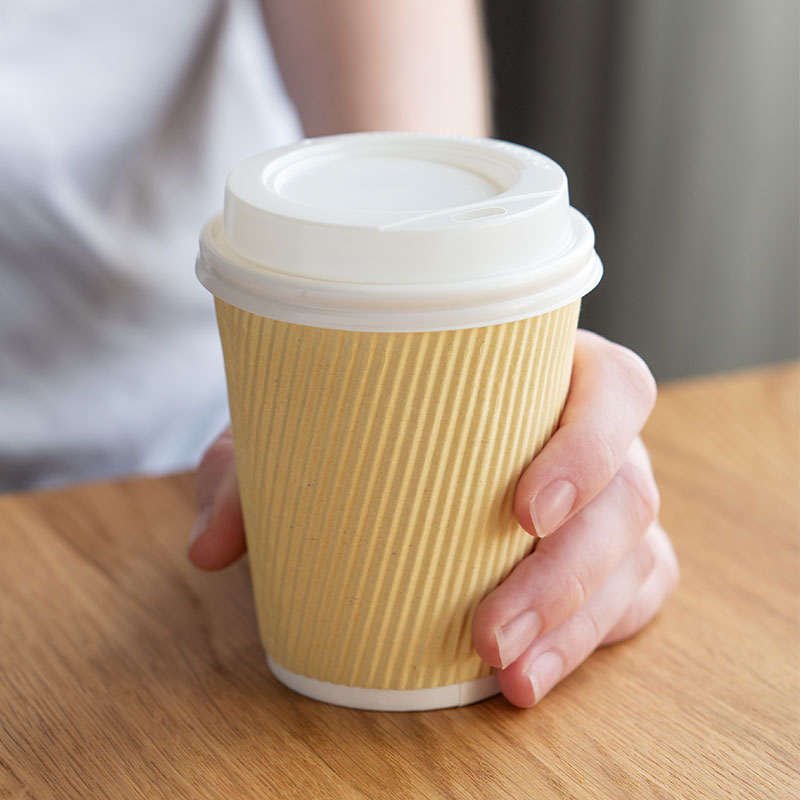
- Hot and cold beverage cups:PHA coating is being used as the inner lining of paper cups in place of PE or PLA. This is one of the highest-profile applications because cup lids and single-use cups are heavily regulated across the EU and UK. Several cup manufacturers have launched PHA-lined cup ranges certified as industrially and home compostable.
- Food service trays and containers:Molded fiber trays and paperboard containers used in quick-service restaurants, canteens, and food delivery services are being coated with PHA to provide grease and moisture resistance during the meal period without creating a non-recyclable or non-compostable waste stream.
- Flexible food wrappers and pouches:Bakery packaging, sandwich wraps, and deli paper are incorporating PHA coatings to replace PFAS-based grease barriers. The coating keeps bread and pastry packaging grease-free while remaining compostable at end of life.
- Beverage cartons and liquid packaging board:Major liquid packaging board manufacturers are developing PHA-based barrier layers for beverage cartons as a long-term alternative to LDPE coatings, which currently make carton recycling logistically challenging.
- Produce and fresh food packaging:PHA-coated paper and board are being trialled for fresh produce trays and punnets, where they provide adequate moisture and gas barrier performance while allowing the packaging to be composted along with organic food waste.
- Single-serve condiment sachets and portion packs:Small-format PHA-coated pouches are being developed for sauces, dressings, and portion-controlled condiments, addressing the huge volume of unrecyclable plastic sachets used in food service.
Certifications That Matter for PHA-Coated Packaging
Claims around biodegradability and compostability in packaging are notoriously prone to greenwashing. When evaluating PHA coating for food and beverage packaging, look specifically for the following third-party certifications rather than relying on marketing language alone:
- OK Compost Industrial (TÜV Austria):Confirms that the complete packaged product — substrate plus coating — biodegrades in an industrial composting facility within 12 weeks at temperatures above 58°C. This is the most common compostability certification for food service packaging in Europe.
- OK Compost HOME (TÜV Austria):A stricter certification confirming biodegradation in ambient home compost conditions (down to 20°C). Very few coatings achieve this, but PHA is one of the materials that can. This is particularly valuable in markets where industrial composting infrastructure is limited.
- OK Biodegradable SOIL (TÜV Austria):Certifies biodegradation in soil environments. Relevant for agricultural or outdoor food service applications where packaging may enter the ground rather than a waste stream.
- OK Biodegradable WATER / Marine (TÜV Austria):Confirms biodegradation in freshwater or marine environments. PHA is one of the few polymer families that can achieve this certification, making it uniquely valuable for coastal food service, marine catering, or fishing industry applications.
- BPI Certification (Biodegradable Products Institute, North America):The North American equivalent of industrial compostability certification, widely recognized by composting facilities and food brands operating in the US and Canada.
- ISCC PLUS or REDcert² (bio-based content):Certifies the sustainability and traceability of the bio-based feedstock used to produce the PHA resin, ensuring that the bio-based claim is genuine and not sourced from land-use-conflicting crops.
Current Limitations and Challenges of PHA Coating
PHA coating is a compelling technology, but it is not without real limitations that packaging buyers and brands need to understand before committing to it.
Cost Remains a Significant Barrier
PHA resin currently costs between USD 4 and USD 8 per kilogram at commercial scale, compared to USD 1–1.5 per kilogram for LDPE and USD 2–3 per kilogram for PLA. This cost premium is largely driven by the complexity and energy intensity of bacterial fermentation and downstream processing. However, several large-scale PHA producers — including Danimer Scientific, Newlight Technologies, and TeraCycle-backed ventures — are investing heavily in scaling capacity, and resin prices are expected to fall significantly through the latter half of the 2020s as production volumes increase.
Processing and Compatibility with Existing Equipment
PHA coatings have a narrower processing window than PE and require careful control of extrusion temperature and cooling. PHB in particular is prone to thermal degradation if the melt temperature exceeds its optimum range, which can cause brittleness in the finished coating. Converters switching from PE or PLA to PHA coating may need to adjust extrusion settings, die configurations, and line speeds, which can involve downtime and technical investment. Formulation developments — including blending PHA with other biopolymers such as PBAT or TPS (thermoplastic starch) — are addressing the brittleness issue, but this remains an active area of technical development.
Composting Infrastructure Gaps
Even the most certified PHA-coated packaging only delivers its environmental benefit if the end consumer correctly separates it into a composting stream — and if that stream leads to a facility that accepts biopolymers. In many markets, industrial composting infrastructure is patchy, and some facilities still reject PHA-coated materials because of uncertainty about contamination or degradation rates. The home compostability advantage of PHA is real, but it depends on the consumer actually composting at home, which varies enormously by geography and household behavior.
Limited Recyclability in Paper Streams
While PHA coating is more dispersible in paper repulping processes than PE in some mill configurations, it is not universally accepted in paper recycling streams. Certifications for paper recyclability with PHA coatings are still being developed and validated by bodies such as CEPI (Confederation of European Paper Industries). Until clear recyclability standards are established and adopted by mills, PHA-coated paper packaging should be directed to composting rather than paper recycling.
How to Source and Specify PHA Coating for Your Packaging
If you are a brand owner, packaging buyer, or converter considering PHA coating for food and beverage packaging, here is a practical framework for approaching the specification and sourcing process:
- Define your barrier requirements first:Identify exactly what the coating needs to do — water vapor barrier, liquid holdout, grease resistance, oxygen barrier — and at what levels. This determines the PHA grade, coating weight, and whether a single PHA layer is sufficient or a multi-layer construction is needed.
- Clarify your end-of-life target:Decide whether industrial compostability, home compostability, or paper recyclability is the priority for your market and consumer base. This determines which PHA grade and certification is most relevant for your application.
- Request full composition disclosure from suppliers:Ensure the PHA coating formulation is free from PFAS, mineral oils, heavy metals, and other substances of concern. Ask for compliance with EU Regulation 10/2011 or FDA 21 CFR for food contact materials.
- Test on your actual substrate and converting process:Barrier performance figures from data sheets are measured on standardized substrates under controlled conditions. Always validate coating performance on your specific paperboard, molded fiber, or other substrate at realistic line speeds and conditions before finalizing specification.
- Verify that the complete package — not just the coating — holds the certification:Compostability certifications must cover the entire package assembly, including inks, adhesives, and any other components. A certified PHA coating on a non-certified substrate does not make the finished package certified.
- Work with converters experienced in biopolymer extrusion coating:Not all converting facilities have the equipment setup or technical expertise to process PHA correctly. Partnering with a converter who has already worked with PHA or other biopolymer coatings will reduce technical risk and shorten the development timeline.
The Regulatory Tailwind Behind PHA Coating Adoption
Legislative pressure is one of the strongest drivers of PHA coating adoption in food and beverage packaging, and it is intensifying. The EU Single-Use Plastics Directive has already restricted or banned a range of single-use plastic packaging items and is driving brands toward plastic-free or certified compostable alternatives. The EU Packaging and Packaging Waste Regulation (PPWR), which is in the final stages of adoption as of 2025, introduces mandatory recyclability and compostability requirements for packaging placed on the EU market, with phased targets that will make PE-coated paper cups and food containers increasingly difficult to justify.
In the UK, the Extended Producer Responsibility scheme is restructuring packaging fees in a way that penalizes non-recyclable and non-compostable materials — creating a direct financial incentive to switch to coatings with better end-of-life credentials. In North America, California's SB 54 and similar state-level legislation are setting strict recyclability and compostability thresholds for food packaging, pushing brands and retailers toward verified compostable coatings.
PFAS phase-outs are another major regulatory driver. The US EPA's PFAS reporting requirements and the EU's REACH restriction on per- and polyfluoroalkyl substances are eliminating a widely used class of grease-barrier coatings from food packaging. PHA coating is one of the most credible PFAS-free alternatives, which means demand is being pulled from two directions simultaneously — sustainability goals and chemical compliance — creating a strong commercial case for investment in PHA coating technology even at current cost premiums.
Custom Packaging Made Easy
From concept to delivery, our team ensures your custom packaging needs are met with efficient communication and professional service.
-
 01
01
Briefing
-

-
 02
02
Material & Structure
-
-
 03
03
Artwork & Printing
-
-
 04
04
Sampling
-
-
 05
05
Testing & Approval
-
-
 06
06
Production & Delivery
-
-
Suzhou Accum Packaging Co., Ltd.
Contact us
TEL: +86 512 6378 6312 TEL: +86 182 6183 5029 Add: Zhujiabang, Zhenze Town, Wujiang District, Suzhou city, Jiangsu Province, China -
Quick Link
Home Products About Us Solutions News Contact Us -
Products Links
Paper Cup Paper Container Retail Shelf Packaging Paper Tray Paper Bucket Accessory Latest Stainless Bottle -
News
The Complete Round Paper Bowl Buying Guide for Home and Business Use Paper Cup Holder: How to Pick the Right One Without the Guesswork Why Does My Paper Straw Get Soggy So Fast? (And Other Paper Straw Questions Answered) -
Mobile
