
 English
 中文简体
中文简体 Español

Everything You Need to Know About Paper Lids: Uses, Types, and Why They Matter
Content
- 1 What Is a Paper Lid and Why Is It Gaining Popularity?
- 2 Common Types of Paper Lids
- 3 Key Materials Used in Paper Lid Manufacturing
- 4 Industries and Businesses That Use Paper Lids
- 5 Environmental Benefits of Switching to Paper Lids
- 6 How to Choose the Right Paper Lid for Your Needs
- 7 Paper Lid vs. Plastic Lid: A Head-to-Head Comparison
- 8 Practical Tips for Businesses Transitioning to Paper Lids
- 9 What's Next for Paper Lid Innovation?
What Is a Paper Lid and Why Is It Gaining Popularity?
A paper lid is a cover or cap made primarily from paper-based materials, designed to seal cups, containers, bowls, and other food or beverage packaging. Unlike traditional plastic lids, paper lids are crafted from materials like kraft paper, coated paperboard, or molded fiber, making them a more sustainable alternative in an era where single-use plastics are increasingly regulated or phased out.
The rise of the paper lid is closely tied to the global push against plastic waste. Cafés, restaurants, food delivery services, and event organizers are turning to paper cup lids and paper container covers as a way to meet environmental standards, satisfy eco-conscious consumers, and comply with legislation banning certain plastic products. But beyond the green credentials, paper lids have also evolved in design and functionality — they can now seal tightly, resist moisture, and even feature drinking holes, tear tabs, or venting mechanisms.
Common Types of Paper Lids
Not all paper lids are created equal. Depending on the application — hot drinks, cold beverages, food containers, or takeaway bowls — different constructions and coatings are used. Here's a breakdown of the most common types:
Paper Cup Lids for Hot Beverages
These are the most widely recognized form of paper lids, designed to fit standard coffee and hot drink cups. They are typically made from thick, double-coated paperboard that can withstand heat and moisture. Many include a pre-punched or foldable drinking tab that allows the consumer to sip without removing the lid entirely. Some high-end designs include a rippled or embossed surface to improve grip and prevent heat transfer to the fingers.
Cold Drink Paper Lids
Cold beverage paper lids face a different challenge — condensation. These lids are often coated with a water-resistant or moisture-barrier layer, such as PLA (polylactic acid, a plant-based plastic) or aqueous coatings, to prevent the paper from softening and losing structural integrity. They frequently include a straw hole or dome shape to accommodate larger drink volumes.
Paper Lids for Food Containers and Bowls
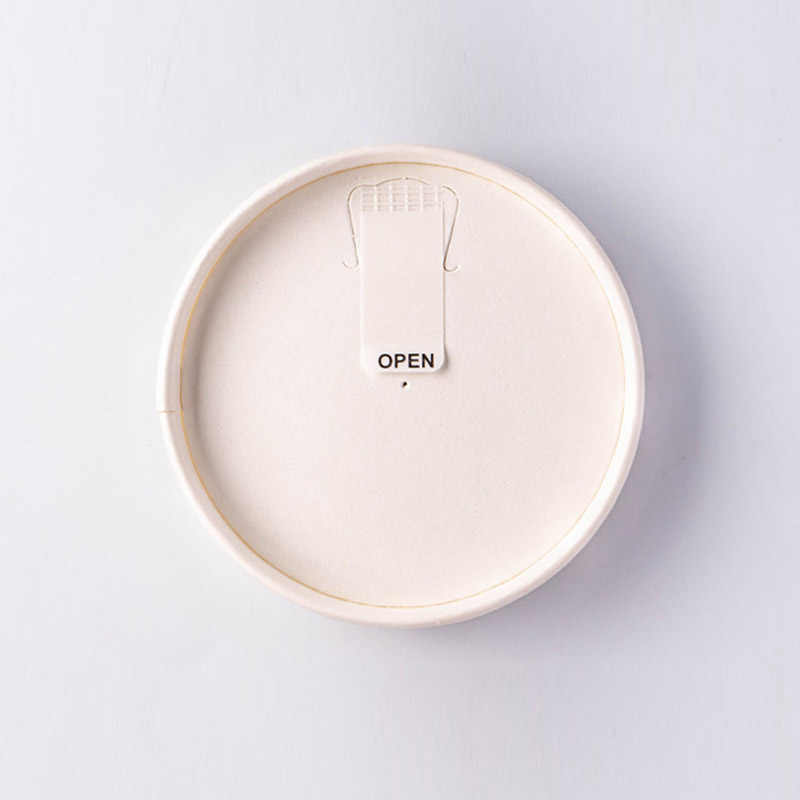
Food containers — think soup bowls, noodle boxes, salad containers, and takeaway trays — are increasingly topped with a flat or slightly domed paper lid. These covers need to form a secure seal to prevent leakage during transport. They are usually made from grease-resistant paperboard or molded fiber, and some are designed to be peeled back and resealed multiple times.
Peel-and-Seal Paper Lids
Common in the dairy and deli sector, peel-and-seal paper lids are used on yogurt pots, cream tubs, and deli containers. These lids are laminated or foil-lined and bonded to the rim of the container with heat or adhesive. The consumer peels back the lid to access the product, and in some designs, can press it back down for temporary re-sealing.
Key Materials Used in Paper Lid Manufacturing
Understanding what goes into a paper lid helps you evaluate its environmental credentials, performance characteristics, and suitability for your needs.
|
Material |
Key Properties |
Common Use |
|
Kraft Paperboard |
Strong, recyclable, brown or bleached |
Hot cup lids, food container covers |
|
PLA-Coated Paper |
Water-resistant, compostable |
Cold drink lids, moisture-heavy applications |
|
Molded Fiber |
Biodegradable, sturdy, textured |
Bowl lids, takeaway container tops |
|
Foil-Laminated Paper |
Excellent barrier properties, heat-sealable |
Dairy tubs, deli containers |
|
Aqueous-Coated Paper |
Glossy, grease-resistant, recyclable |
Fast food container lids, snack packaging |
Industries and Businesses That Use Paper Lids
Paper lids are far more widespread than most people realize. Here are the primary sectors that rely on them:
Coffee Shops and Cafés:The café industry is the biggest consumer of paper cup lids. With millions of takeaway coffees sold daily worldwide, switching from plastic to paper coffee cup lids has a significant environmental impact. Specialty coffee brands often use custom-printed paper lids as a branding tool.
Fast Food and QSR Chains:Quick-service restaurants use paper lids on soup cups, side containers, and sauce pots. Many major chains have committed to eliminating plastic lids by specific target years, accelerating the paper lid transition.
Food Delivery and Takeaway Services:Delivery packaging must be secure and spill-proof. Paper container lids that lock onto bowls and trays are essential for maintaining food quality during transit.
Supermarkets and Retail Food:Deli counters, prepared meal sections, and fresh produce departments use peel-seal paper lids on a wide variety of pots, trays, and tubs.
Events and Catering:Outdoor events, festivals, and corporate catering use paper lids for drinks and food portions where waste management and sustainability are a priority.
Healthcare and Institutional Settings:Hospitals and care homes use paper-lidded cups and containers for portion-controlled meals and medication delivery, where hygiene and safety are paramount.
Environmental Benefits of Switching to Paper Lids
The environmental argument for paper lids over plastic is strong, but it's worth understanding the nuances so you can make truly informed decisions.
Reduced Plastic Pollution
Traditional plastic lids — usually made from polystyrene (PS) or polypropylene (PP) — are notoriously difficult to recycle because they are small, lightweight, and often contaminated with food residue. Many end up in landfill or as litter. Paper lids, by contrast, decompose naturally and are less likely to persist in the environment as microplastics.
Compostability and Recyclability
Many paper lids, particularly those coated with PLA or water-based coatings, are certified industrially compostable. This means they can be processed in commercial composting facilities and returned to the earth. Uncoated or aqueous-coated paper lids are often curbside recyclable, depending on local waste management infrastructure.
Lower Carbon Footprint (with Caveats)
Paper production does consume water and energy, and not all paper sourcing is sustainable. However, paper lids made from FSC-certified (Forest Stewardship Council) paperboard come from responsibly managed forests, and their overall lifecycle carbon footprint is generally lower than that of petroleum-based plastic lids — especially when the paper lid is composted or recycled at end of life.
How to Choose the Right Paper Lid for Your Needs
Selecting the correct paper lid involves more than just picking a size. Here are the most important factors to consider:
Fit and Diameter
Paper lids must match the rim diameter of the cup or container they are meant to seal. Common coffee cup lid sizes run from 80mm for espresso cups to 90mm and 104mm for standard and large takeaway cups. Always check the inner diameter of your container rim and match it precisely — even a millimeter's difference can result in a poor seal or lid pop-off.
Temperature Resistance
For hot drinks, choose a paper lid rated for temperatures above 90°C (194°F). Look for double-wall construction or a heat-barrier coating to prevent the lid from softening or deforming under steam pressure. For cold drinks, prioritize moisture resistance to avoid sogginess.
Leak and Spill Resistance
If the lid will be on a container that gets shaken or transported (like food delivery), opt for a lid with a secure snap-fit rim rather than a simple fold-over edge. Some paper lids feature locking tabs or a raised lip that grips the container edge firmly.
Certifications and Compliance
If sustainability is a priority, look for paper lids with:
FSC certification (sustainably sourced paper)
OK Compost Industrial or Home certification (compostable)
Food contact safety certification (FDA, EU 10/2011, or equivalent)
PFAS-free labeling (avoiding "forever chemicals" in grease-resistant coatings)
Custom Printing and Branding
Paper lids offer an underused branding surface. Custom-printed paper lids with your logo, brand colors, or promotional messaging turn every takeaway drink or meal into a brand touchpoint. Food-safe inks and water-based printing processes ensure that custom prints don't compromise the lid's safety or sustainability credentials.
Paper Lid vs. Plastic Lid: A Head-to-Head Comparison
|
Feature |
Paper Lid |
Plastic Lid |
|
Recyclability |
Often curbside recyclable |
Rarely recycled in practice |
|
Compostability |
Compostable (certified types) |
Not compostable |
|
Heat Resistance |
Good (with proper coating) |
Excellent |
|
Moisture Resistance |
Moderate (coating-dependent) |
Excellent |
|
Consumer Perception |
Positive / eco-friendly image |
Increasingly negative |
|
Cost |
Slightly higher per unit |
Lower per unit |
|
Regulatory Compliance |
Compliant in most markets |
Banned in some regions |
|
Branding Potential |
High (printable surface) |
Limited |
Practical Tips for Businesses Transitioning to Paper Lids
Making the switch from plastic to paper lids requires some planning, especially for high-volume operations. Here are practical steps to make the transition smooth:
Audit your current container range:List all the cup and container sizes you use and identify the corresponding lid diameters. This ensures you order paper lids that fit without guesswork.
Request samples before bulk ordering:Paper lid performance can vary significantly between suppliers. Test samples for fit, heat resistance, and ease of use — especially the drinking tab or tear mechanism — before committing to large quantities.
Train staff on proper lid application:Paper lids sometimes require a firmer press or a specific technique to seat correctly on the rim. A quick staff training session prevents leaks and customer complaints.
Communicate the change to customers:Use signage or messaging to let customers know you've switched to paper lids. Eco-conscious customers appreciate the transparency, and it reinforces your brand's sustainability values.
Store paper lids in dry conditions:Unlike plastic lids, paper lids can absorb ambient humidity if stored improperly, which can affect their fit and performance. Keep them in sealed boxes in a dry area.
Check local waste disposal options:The environmental benefit of a compostable paper lid only materializes if it ends up in a composting stream. Check whether your local waste management handles industrial compostables, and communicate correct disposal to customers if possible.
What's Next for Paper Lid Innovation?
The paper lid market is evolving rapidly, driven by material science innovation, design engineering, and tightening legislation. Several developments are worth watching:
Barrier coating technology is advancing quickly. The main weakness of paper lids — moisture and heat resistance — is being addressed through new water-based coatings and mineral-based barriers that perform comparably to plastic-laminated papers, but without the compostability trade-offs. These next-generation coatings allow paper lids to maintain structural integrity even in high-humidity or high-temperature environments.
Smart paper lids with embedded QR codes, freshness indicators, or tamper-evident seals are beginning to appear in premium food packaging. These features add value beyond simple containment — they allow brands to connect packaging to digital experiences, verify food safety, or prove that a container has not been opened in transit.
Fiber molding technology is also improving, enabling the creation of more complex lid shapes — including locking tabs, raised rims, and ergonomic drinking openings — that were previously only achievable in plastic. As tooling costs for molded fiber decrease, these more functional paper lid designs will become accessible to a wider range of businesses.
Ultimately, the paper lid is no longer just an environmental compromise — it's becoming a genuinely competitive product that can match plastic on performance while offering clear advantages in sustainability, consumer perception, and regulatory compliance. Whether you're a coffee shop owner, a food packaging buyer, or simply a curious consumer, understanding the world of paper lids puts you ahead of one of the most important shifts in modern packaging.
Custom Packaging Made Easy
From concept to delivery, our team ensures your custom packaging needs are met with efficient communication and professional service.
-
 01
01
Briefing
-

-
 02
02
Material & Structure
-
-
 03
03
Artwork & Printing
-
-
 04
04
Sampling
-
-
 05
05
Testing & Approval
-
-
 06
06
Production & Delivery
-
-
Suzhou Accum Packaging Co., Ltd.
Contact us
TEL: +86 512 6378 6312 TEL: +86 182 6183 5029 Add: Zhujiabang, Zhenze Town, Wujiang District, Suzhou city, Jiangsu Province, China -
Quick Link
Home Products About Us Solutions News Contact Us -
Products Links
Paper Cup Paper Container Retail Shelf Packaging Paper Tray Paper Bucket Accessory Latest Stainless Bottle -
News
Paper Cup Holder: How to Pick the Right One Without the Guesswork Why Does My Paper Straw Get Soggy So Fast? (And Other Paper Straw Questions Answered) Paper Soup Container Explained: Sizes, Lids, and Storage Tips You Should Know -
Mobile
