
 English
 中文简体
中文简体 Español

What Is a Ripple Wall Paper Cup and How Does It Work?
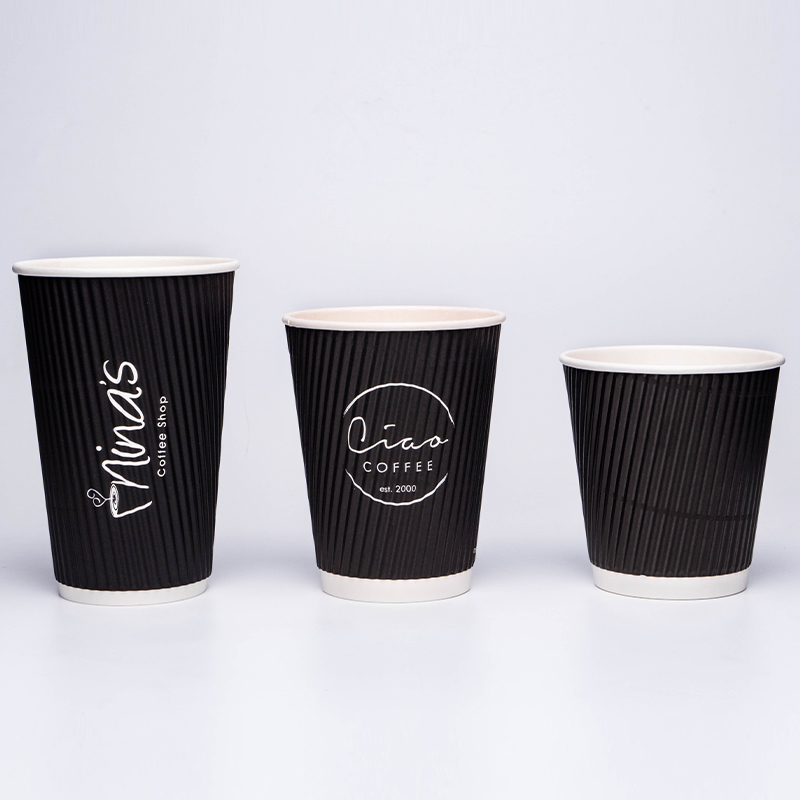
A ripple wall paper cup is a type of disposable hot beverage container distinguished by its corrugated outer layer — a series of raised, parallel ridges that wrap around the exterior of the cup from base to rim. This ribbed sleeve is bonded directly to a smooth inner cup during manufacturing, creating an integrated two-layer structure that requires no separate sleeve or cup holder. The corrugated ridges trap a continuous series of small air pockets between the outer and inner walls, and it is this trapped air that gives the ripple cup its defining functional advantage: outstanding thermal insulation that keeps hot drinks hot while protecting the customer's hand from discomfort.
Unlike single wall paper cups that transfer heat directly to the outer surface, or double wall cups that rely on a sealed air gap between two smooth layers, the ripple wall design achieves insulation through physical structure rather than an enclosed cavity. The ridges themselves reduce the surface area of direct contact between the cup and the hand, and the air channeled between each corrugation acts as a thermal buffer. This makes the ripple paper cup particularly effective at higher beverage temperatures, performing reliably with drinks served at 80°C to 95°C without the exterior becoming painfully hot to hold.
From a practical standpoint, ripple wall cups are self-contained and ready to use straight from the sleeve — no assembly, no additional components, no counter space consumed by stacks of cardboard sleeves. This operational simplicity, combined with the cup's distinctive tactile texture and visual identity, has made it a preferred choice across specialty coffee shops, artisan bakeries, food markets, and premium food service environments globally.
Content
- 1 Ripple Wall vs. Single Wall vs. Double Wall: A Direct Comparison
- 2 The Science Behind Ripple Cup Insulation
- 3 Available Sizes and Which Beverages They Suit
- 4 Materials and Coatings Used in Ripple Wall Paper Cups
- 5 Branding and Custom Printing on Ripple Wall Cups
- 6 Industries and Settings Where Ripple Cups Deliver the Most Value
- 7 What to Check Before Buying Ripple Wall Paper Cups in Bulk
Ripple Wall vs. Single Wall vs. Double Wall: A Direct Comparison
Understanding where the ripple wall paper cup sits relative to other hot cup formats is essential for making an informed purchasing decision. Each wall construction type serves a different balance of cost, insulation, aesthetics, and operational simplicity. The table below provides a side-by-side comparison of the three main formats.
|
Feature |
Single Wall |
Double Wall |
Ripple Wall |
|
Insulation Method |
None (sleeve required) |
Sealed air gap |
Corrugated air channels |
|
Sleeve Needed? |
Yes |
No |
No |
|
Hand Comfort |
Poor (without sleeve) |
Good |
Excellent |
|
Grip Quality |
Low (smooth surface) |
Moderate |
High (ribbed texture) |
|
Visual Appeal |
Basic |
Clean and minimal |
Distinctive and premium |
|
Unit Cost |
Lowest |
Medium |
Medium-High |
|
Storage Footprint |
Compact |
Moderate |
Bulkier per unit |
|
Best For |
Vending, canteens |
Cafes, offices |
Artisan cafes, premium events |
The ripple wall cup consistently leads on the metrics that matter most to customer-facing food service operations: hand comfort, grip, and visual distinction. While it occupies slightly more storage space than smooth-walled alternatives due to the raised ridges, this trade-off is well justified in settings where the cup is part of the overall brand and customer experience.
The Science Behind Ripple Cup Insulation
The insulation performance of a ripple wall paper cup is rooted in two fundamental principles of heat transfer: reduced conduction and enhanced convective resistance. Understanding these mechanisms clarifies why the corrugated design outperforms simpler alternatives at the temperatures typical of hot coffee, tea, and other hot beverages.
Reduced Conduction Through Air Entrapment
Air is one of the poorest conductors of heat among common materials, with a thermal conductivity approximately 40 times lower than that of paperboard. The corrugated ridges of a ripple wall cup create dozens of narrow air channels running vertically along the cup's exterior. These channels are not sealed — air can enter and exit — but because each channel is narrow and bounded by paper on both sides, convective airflow within the channel is negligible. The result is a layer of effectively still air that resists the transfer of heat from the inner cup wall to the outer surface and ultimately to the customer's hand.
Reduced Contact Area With the Hand
Beyond the insulating air pockets, the physical ridges of a ripple cup reduce the actual surface area in direct contact with the fingers. When holding a smooth cup, the palm and fingers make broad, continuous contact with the hot surface. With a ripple cup, only the peaks of the corrugated ridges touch the hand — the valleys between ridges remain in contact only with air. This dramatically reduces conductive heat transfer from cup to hand, making ripple cups perceptibly more comfortable to hold even when the inner beverage is at high temperature.
Available Sizes and Which Beverages They Suit
Ripple wall paper cups are manufactured in a range of sizes that align with standard hot beverage portion formats. Unlike some specialty cup formats that are only available in limited sizes, ripple cups are produced across the full range from espresso-scale to large takeaway portions, making them a versatile single-format solution for operations serving diverse beverage menus.
- 4 oz (120 ml):Designed for espresso-based drinks, single-shot macchiatos, and tasting-portion hot beverages. The small format is popular at specialty coffee tasting events, artisan roasters, and high-end hospitality settings where multiple small servings are presented as part of a curated experience.
- 8 oz (240 ml):The standard small coffee size, ideal for flat whites, short blacks, small lattes, and single-serve teas. This is one of the most popular ripple cup sizes among independent cafes and morning commuter-focused outlets.
- 12 oz (355 ml):The most widely used size globally, accommodating medium lattes, cappuccinos, regular brewed coffees, and most standard tea formats. A strong seller across all food service channels due to its versatility.
- 16 oz (475 ml):The large cup format favored by customers who want an extended drinking experience. Particularly popular for hot chocolates, chai lattes, matcha drinks, and large brewed coffees served at bakeries and sit-down café counters.
- 20 oz (590 ml):An extra-large format suited to high-volume hot beverages, travel mugs, and specialty drinks with added milk, syrups, or foam. Less common in ripple format but available from specialist suppliers for operations requiring larger portions.
Materials and Coatings Used in Ripple Wall Paper Cups
Like all hot paper cups, ripple wall cups rely on an interior coating to create a moisture and heat barrier between the hot beverage and the paperboard. The choice of coating material determines the cup's heat resistance, its environmental credentials, and how it should be disposed of at end of life. The corrugated outer layer adds an additional material consideration, as it can be made from virgin kraft paper, recycled-content board, or alternative fiber sources.
Inner Cup Construction
The inner cup of a ripple wall design is typically constructed from 210 to 300 gsm food-grade paperboard, chosen for its rigidity and ability to hold a formed shape under load. This inner cup receives the liquid-barrier coating on its interior surface — most commonly PE (polyethylene) for standard commercial cups, or PLA (polylactic acid) for compostable variants. The smooth inner surface of the cup also provides the primary printing substrate for branding, since the corrugated outer layer — while printable — offers a less uniform surface for fine-detail graphics.
Corrugated Outer Layer
The outer corrugated wrap is produced from a separate sheet of kraft paper that is mechanically formed into a fluted profile and then bonded to the outer surface of the inner cup. The adhesive used must be food-safe and heat-resistant to maintain structural integrity when the cup is in use. For eco-certified ripple cups, both the inner cup and outer corrugation should carry FSC or PEFC chain-of-custody certification, confirming that the paper fiber originates from responsibly managed forest sources.
Compostable Ripple Cups
Compostable ripple wall paper cups combine a PLA-coated inner cup with an unbleached kraft corrugated outer layer, creating a product that — when disposed of correctly in an industrial composting facility — breaks down completely within 90 to 180 days. For operations committed to zero-waste or closed-loop composting models, compostable ripple cups paired with compostable PLA lids provide a complete disposable beverage service solution with minimal residual environmental impact. Always verify compostability claims with BPI, DIN CERTCO, or TÜV Austria certification documentation before purchasing.
Branding and Custom Printing on Ripple Wall Cups
The ripple wall paper cup offers a unique and highly effective canvas for brand expression. Its distinctive corrugated exterior immediately communicates quality and craft, setting branded cups apart from standard smooth-walled competitors before a single graphic element is even considered. When custom printing is added to this inherently premium format, the result is a cup that functions as a powerful mobile brand ambassador.
Printing on ripple wall cups is most effectively executed on the smooth inner cup body, which provides a flat, uniform surface for high-resolution flexographic or digital printing. Full-wrap designs that cover the entire visible surface of the cup — above the corrugated lower section — are particularly popular, as they maximize logo and brand color visibility. Some manufacturers also offer printing directly on the corrugated outer layer using adapted print processes, though resolution is naturally limited by the textured substrate. The combination of a printed inner cup visible above the corrugation line and a natural kraft corrugated lower section creates a visual aesthetic that resonates strongly with the craft food and beverage market.
Minimum order quantities for custom branded ripple wall cups typically start at 5,000 units per size, with tiered pricing structures that reward higher volumes. Digital printing options at lower minimums — sometimes as few as 1,000 units — are available through specialist short-run suppliers, making custom ripple cups accessible to smaller independent businesses that previously could not justify the investment. Lead times for custom orders generally range from three to six weeks, including artwork proofing and sample approval stages.
Industries and Settings Where Ripple Cups Deliver the Most Value
While ripple wall paper cups can technically be used in any hot beverage service context, they deliver their greatest value in specific environments where their combination of insulation, grip, aesthetics, and operational simplicity aligns most directly with operational needs and customer expectations.
- Specialty and Independent Coffee Shops:The ripple cup's craft aesthetic and superior hand comfort align perfectly with the values and customer experience of artisan coffee culture. Independent cafes that invest in quality beans, skilled baristas, and thoughtful interior design naturally extend that attention to their packaging choices.
- Farmers' Markets and Food Festivals:Outdoor event settings demand cups that customers can hold comfortably for extended periods while browsing, socializing, or eating. The ripple cup's no-sleeve, ready-to-serve format is ideal for high-traffic market stalls and festival catering where speed of service is critical.
- Hotel and Hospitality Breakfast Service:Premium hotels seeking to replace reusable cups at breakfast buffets or in-room beverage stations with disposable alternatives frequently choose ripple cups for their ability to maintain a quality impression without the operational overhead of dishwashing.
- Corporate Catering and Office Hospitality:When serving hot beverages at board meetings, client presentations, or corporate events, the ripple cup conveys a level of attention to detail that basic single wall cups cannot match. Many corporate catering companies stock ripple cups specifically for premium client-facing events.
- Bakeries and Patisseries:Hot beverage service in bakery settings benefits from the ripple cup's visual alignment with artisan, handcrafted food values. The natural kraft corrugation complements the aesthetic of wooden counters, chalkboard menus, and brown paper bags that characterize the modern bakery experience.
What to Check Before Buying Ripple Wall Paper Cups in Bulk
Purchasing ripple wall cups in bulk requires careful supplier evaluation to avoid quality issues that only become apparent after delivery. The following checklist covers the most important verification points before committing to a large order.
- Corrugation Bond Integrity:The adhesive bond between the corrugated outer wrap and the inner cup must remain secure under both high-temperature use and cold storage conditions. Request samples and fill them with boiling water — hold the cup firmly and check whether the outer layer shows any tendency to separate or delaminate from the inner cup after several minutes of use.
- Inner Coating Specification:Confirm whether the interior coating is PE or PLA, and verify the maximum rated temperature. This affects both performance suitability and end-of-life disposal options — critical information if your operation has sustainability commitments or operates in a regulated waste management zone.
- Lid Compatibility:Ripple wall cups have the same rim diameter conventions as standard hot cups, but the corrugated outer layer can slightly alter the grip profile around the rim area. Test lid fit — particularly snap-on lid engagement — with your preferred lid format before ordering to confirm a secure, leak-resistant seal.
- Food Safety Certification:Ensure the cup and its adhesive components are certified food-safe under the relevant regulatory framework for your market — FDA food contact standards for the US, EC No. 1935/2004 for the EU, or equivalent local standards elsewhere.
- Stack Height and Storage Space:Ripple cups stack less compactly than smooth-walled alternatives due to the corrugated ridges. Calculate the storage footprint of your intended order volume before purchasing — particularly important for small-format cafes or mobile catering operations with limited storage space.
- Sustainable Sourcing Documentation:If FSC or PEFC certification is important to your brand or customer base, request chain-of-custody certification documentation covering both the inner cup paperboard and the corrugated outer wrap — both components should be covered, not just one.
Custom Packaging Made Easy
From concept to delivery, our team ensures your custom packaging needs are met with efficient communication and professional service.
-
 01
01
Briefing
-

-
 02
02
Material & Structure
-
-
 03
03
Artwork & Printing
-
-
 04
04
Sampling
-
-
 05
05
Testing & Approval
-
-
 06
06
Production & Delivery
-
-
Suzhou Accum Packaging Co., Ltd.
Contact us
TEL: +86 512 6378 6312 TEL: +86 182 6183 5029 Add: Zhujiabang, Zhenze Town, Wujiang District, Suzhou city, Jiangsu Province, China -
Quick Link
Home Products About Us Solutions News Contact Us -
Products Links
Paper Cup Paper Container Retail Shelf Packaging Paper Tray Paper Bucket Accessory Latest Stainless Bottle -
News
Double Wall Paper Cup: Do You Really Need One for Your Coffee Shop? The Complete Round Paper Bowl Buying Guide for Home and Business Use Paper Cup Holder: How to Pick the Right One Without the Guesswork -
Mobile
