
 English
 中文简体
 Español


Single Wall Coffee Cups: A Simple Guide to Picking the Right Ones
Content
- 1 What Are Single Wall Coffee Cups?
- 2 Single Wall vs. Double Wall vs. Ripple Wall Cups
- 3 Common Sizes of Single Wall Paper Cups
- 4 Where Single Wall Coffee Cups Work Best
- 5 Pros and Cons of Single Wall Paper Coffee Cups
- 6 How to Choose the Right Single Wall Coffee Cups
- 7 Simple Ways to Make Single Wall Cups Comfortable to Hold
- 8 Buying Single Wall Coffee Cups in Bulk
- 9 How to Store and Handle Paper Cups Properly
- 10 Frequently Asked Questions About Single Wall Coffee Cups
- 11 Final Thoughts on Single Wall Coffee Cups
What Are Single Wall Coffee Cups?
Single wall coffee cups are disposable hot drink cups made from one layer of paperboard. The inside is usually coated with a thin lining so coffee, tea, or hot chocolate doesn't soak through. Because there is only one layer, they are light, stackable, and cheaper than insulated cups. You'll see them at coffee kiosks, bakeries, offices, hospitals, and event stands, anywhere people need a lot of hot cups quickly without spending much per cup.
You may also see them sold as single wall paper coffee cups, single wall paper cups, single wall hot cups, or single wall disposable coffee cups. They all describe the same basic product. The differences come from the paperboard thickness, the lining type, and the print or finish on the outside.
Single Wall vs. Double Wall vs. Ripple Wall Cups
The main difference is insulation. A single wall paper coffee cup has no extra layer, so heat passes through the cup more easily and the outside can feel hot to the touch. Double wall and ripple wall cups add a second layer or an air gap to protect the hand. The table below shows how they compare.
| Feature | Single Wall | Double Wall | Ripple Wall |
| Layers | One | Two, bonded together | One inner cup plus a rippled outer sleeve |
| Heat protection | Low, a sleeve is often needed | High | Very high |
| Cost per cup | Lowest | Medium | Highest |
| Storage space | Compact, nests tightly | Slightly bulkier | Bulkiest |
| Best for | High volume, quick service, samples | Premium takeaway, no sleeve needed | Very hot drinks, long walks |
Common Sizes of Single Wall Paper Cups
Single wall coffee cups are sold in a fairly standard range of sizes. Most cafes stock three or four of them. Sizes are measured in ounces, and the lid diameter matters just as much as the cup volume, because a lid that doesn't fit will leak. The figures below are typical, so always check the product specification before you order.
| Size | Approx. Volume | Typical Lid Size | Common Use |
| 4 oz | 120 ml | About 62 mm | Espresso shots, tasting samples |
| 8 oz | 240 ml | 80 mm | Small coffee, tea, kids' hot chocolate |
| 12 oz | 355 ml | 80 mm or 90 mm | Standard coffee, latte |
| 16 oz | 475 ml | 90 mm | Large coffee, americano |
| 20 oz | 590 ml | 90 mm | Extra-large drinks, tea |
Where Single Wall Coffee Cups Work Best
Single wall coffee cups are not the right choice for every situation, but they are very practical in the right one. Here are the places where they make the most sense.
- Busy coffee shops and kiosks where cups are filled and handed over within a minute, so the customer is not holding a hot cup for long.
- Offices and break rooms where staff drink at their desks and the cost per cup matters more than premium insulation.
- Events, conferences, and weddings where hundreds of cups are needed in a short time and low cost is a priority.
- Hospitals, schools, and waiting rooms where drinks are served at moderate temperatures and cups are used once and thrown away.
- Sampling and tasting, where a small 4 oz single wall paper cup lets customers try a new blend without wasting product.
Pros and Cons of Single Wall Paper Coffee Cups
What you gain
- Lower price per cup, which adds up quickly when you serve hundreds of drinks a day.
- Less storage space, because the cups nest tightly and a case holds more units.
- A large printable surface for logos and designs, with no extra layer to get in the way.
- Lighter weight, which lowers shipping costs.
What to watch out for
- The outside can get hot quickly with fresh coffee, so most customers will want a sleeve.
- Heat escapes faster than with an insulated cup, so drinks cool down sooner.
- Thin, low-quality cups can soften or feel flimsy when full, especially in larger sizes.
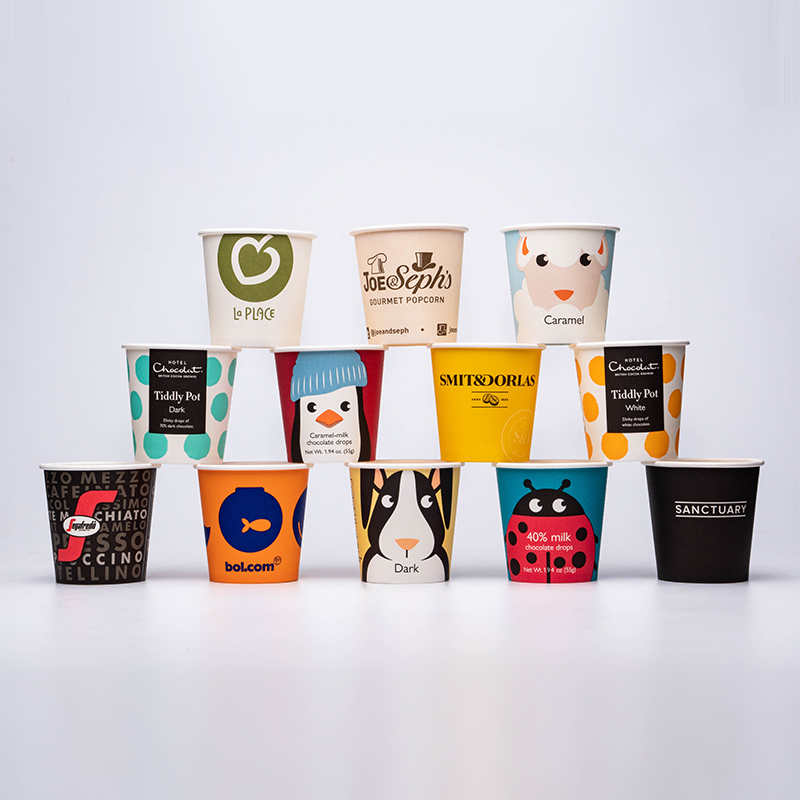
How to Choose the Right Single Wall Coffee Cups
Check the paperboard thickness
Paperboard weight is measured in GSM (grams per square meter). Good single wall cups often use paperboard in the range of about 210 to 300 GSM. Thicker board feels sturdier and is less likely to bend when someone grips a full 16 oz or 20 oz cup. If a supplier does not list the GSM, ask for it or order a sample first.
Pick the right lining
The lining keeps liquid from soaking into the paper. Standard cups use a polyethylene (PE) coating. Eco-focused cups use a plant-based PLA lining or a water-based coating instead. PLA cups are often marketed as compostable, but they usually need commercial composting facilities, so check what your local waste system accepts before making green claims to customers.
Match the lid to the cup
Always buy lids with the same rim diameter as your cups. A sip-through lid is best for walking customers, while a flat lid suits dine-in orders. Ordering cups and lids from the same supplier reduces the risk of leaks and mismatched sizes.
Decide on plain or printed
Plain white or kraft cups are cheap and flexible, since you can use them for any drink or event. Custom printed single wall paper cups carry your brand into every customer's hand, but they usually come with a minimum order quantity and a longer lead time. A good middle path is to use plain cups for everyday service and printed ones for your best-selling sizes.
Simple Ways to Make Single Wall Cups Comfortable to Hold
The most common complaint about single wall coffee cups is heat. You don't need to switch to a more expensive cup to fix it. A few small steps are enough.
- Offer cardboard cup sleeves, which add an insulating layer for only a few cents each.
- Fill cups slightly below the rim so the hottest liquid does not sit right against the upper edge where people hold it.
- Move up one size or use a sturdier cup for extra-hot drinks such as americanos or brewed tea.
- Use a cup carrier when serving multiple drinks so no one has to hold several hot cups at once.
Buying Single Wall Coffee Cups in Bulk
Buying single wall coffee cups wholesale is almost always cheaper than buying small packs. Cases usually contain 500 to 1,000 cups, and the price per cup drops as your order grows. Before you commit to a large order, work through the points below.
- Estimate your weekly cup use by size so you don't overbuy a size that sells slowly.
- Request a sample to test strength, lid fit, and how the cup feels with a hot drink.
- Confirm that the cups are food-grade and ask the supplier for the relevant safety documents.
- Check delivery time and the minimum order for custom printing so you never run out mid-season.
How to Store and Handle Paper Cups Properly
Paper cups can absorb moisture and odors, so storage matters more than most people expect. Keep cases off the floor on a shelf or pallet, away from sinks, cleaning chemicals, and strong-smelling foods. Leave the sleeves sealed until you need them, and take cups from the top of the stack without touching the rim. A dry, clean storage area keeps the cups rigid and the rim shape accurate, so lids snap on securely.
Frequently Asked Questions About Single Wall Coffee Cups
Are single wall coffee cups safe for very hot drinks?
Yes, they are made for hot beverages. The cup will hold the liquid without problems, but the outside will feel hot, so a sleeve is recommended for freshly brewed coffee.
Can I use single wall paper cups for cold drinks?
They can hold cold drinks for a short time, but condensation may soften the outside over a long period. For iced drinks, cups made specifically for cold beverages are a better choice.
Are single wall coffee cups recyclable?
It depends on the lining and your local facilities. Cups with a plastic lining are often hard to recycle in standard paper streams. Cups with a plant-based or water-based lining may be accepted in some programs, so check with your waste provider.
Which size sells best?
In most cafes the 12 oz and 16 oz sizes account for the largest share of orders, with 8 oz as a solid third. Start with those three, then add 4 oz or 20 oz if your menu needs them.
Final Thoughts on Single Wall Coffee Cups
Single wall coffee cups are a simple, low-cost choice for any business that serves a lot of hot drinks. They won't insulate as well as a double wall cup, but with a good paperboard weight, the right lining, a matching lid, and an affordable sleeve, they perform well for daily service. Start by testing a sample, choose the sizes your customers actually order, and buy in bulk once you are confident in the quality.
Custom Packaging Made Easy
From concept to delivery, our team ensures your custom packaging needs are met with efficient communication and professional service.
-
 01
Briefing
-

-
 02
Material & Structure
-
-
 03
Artwork & Printing
-
-
 04
Sampling
-
-
 05
Testing & Approval
-
-
 06
Production & Delivery
-
-
Suzhou Accum Packaging Co., Ltd.
Contact us
TEL: +86 512 6378 6312 TEL: +86 182 6183 5029 Add: Zhujiabang, Zhenze Town, Wujiang District, Suzhou city, Jiangsu Province, China -
Quick Link
Home Products About Us Solutions News Contact Us -
Products Links
Paper Cup Paper Container Retail Shelf Packaging Paper Tray Paper Bucket Accessory Latest Stainless Bottle -
News
Single Wall Coffee Cups: A Simple Guide to Picking the Right Ones Halloween is coming Ice Cream Paper Cup: What Size, Material, and Lid Do You Really Need? -
Mobile
