
 English
 中文简体
 Español


Disposable Ice Cream Cups: How to Pick the Right Ones and Stop Wasting Money
If you run an ice cream shop, a food truck, a catering business, or you're simply planning a big birthday party, disposable ice cream cups are one of the most useful supplies you can buy. But they aren't all the same. A cup that works well for a scoop of vanilla can turn into a soggy mess with a hot fudge sundae, and a cup that's too small can make your portions look stingy. This guide covers what to look for so you buy the right cups the first time.
Content
- 1 What Are Disposable Ice Cream Cups and Where Are They Used?
- 2 Paper, Plastic, or Compostable: Which Material Is Best?
- 3 How to Choose the Right Size for Your Ice Cream Cups
- 4 Do You Need Ice Cream Cups With Lids?
- 5 Key Features to Check Before You Buy in Bulk
- 6 Common Mistakes When Buying Disposable Ice Cream Cups
- 7 Tips to Reduce Waste and Save Money
- 8 Final Thoughts on Choosing Disposable Ice Cream Cups
What Are Disposable Ice Cream Cups and Where Are They Used?
Disposable ice cream cups, also called single-use ice cream cups or disposable dessert cups, are small containers designed to hold frozen treats such as ice cream, gelato, frozen yogurt, sorbet, and sundaes. They are made to be used once and thrown away (or composted), which removes the need for washing and cuts down on cross-contamination risks.
They are common in many settings, and each one has slightly different needs:
- Ice cream parlors and gelato shops that serve dozens or hundreds of scoops every day
- Frozen yogurt and self-serve dessert bars where customers fill their own cups
- Restaurants and cafes that offer dessert cups or small tasting portions
- Weddings, school events, birthday parties, and corporate gatherings
- Takeout and delivery orders, where lids and leak resistance matter
Paper, Plastic, or Compostable: Which Material Is Best?
Material is the biggest decision you'll make. It affects how the cup looks, how long it holds up against melting ice cream, how much it costs, and how customers feel about your brand.
Paper Ice Cream Cups
Paper ice cream cups are the most popular choice for shops. They are usually made from food-grade paperboard with a thin lining, often polyethylene (PE) or a water-based coating, that stops moisture from soaking through. They are easy to print with logos and colorful designs, which makes them a good fit for branding. Double-wall versions give extra insulation, so the cup won't get cold and wet on the outside in a customer's hand.
Plastic Ice Cream Cups
Clear plastic cups, usually PET or polypropylene (PP), let customers see the layers of a parfait, sundae, or frozen yogurt with toppings. They are firm, resist leaks well, and pair neatly with domed lids. The downside is that some customers and local regulations push against single-use plastic, so check what's allowed in your area before ordering in bulk.
Compostable Ice Cream Cups
Compostable ice cream cups are made from materials such as bagasse (sugarcane fiber), PLA-lined paper, or other plant-based fibers. They suit eco-minded businesses, but keep in mind that "compostable" often means commercial composting facilities only. If your customers can't actually compost the cups, the environmental benefit is smaller than the label suggests. Ask suppliers for certifications such as BPI or EN 13432 rather than relying on marketing claims.
Here is a quick comparison to help you decide:
| Material | Best For | Strengths | Watch Out For |
| Paper | Scoop shops, branded takeout | Easy to print, good insulation, affordable | Can soften if ice cream melts for a long time |
| Plastic (PET/PP) | Parfaits, sundaes, delivery | Clear view, leak resistant, sturdy | Restrictions in some regions, less eco-friendly image |
| Compostable | Eco-focused brands, events | Sustainable image, plant-based materials | Higher price, needs proper composting access |
How to Choose the Right Size for Your Ice Cream Cups
Size affects both customer satisfaction and your profit margins. Disposable ice cream cups are typically measured in ounces (oz) or milliliters (ml). A cup that is too large makes a single scoop look lonely, while one that is too small leads to overflow and complaints.
| Cup Size | Approx. Volume | Typical Use |
| 3 to 4 oz | 90 to 120 ml | Free samples, tasting spoons, kids' mini portions |
| 5 to 6 oz | 150 to 180 ml | Single scoop, party servings |
| 8 oz | 240 ml | Double scoop, small sundae |
| 12 oz | 360 ml | Triple scoop, frozen yogurt with toppings |
| 16 oz and up | 480 ml and up | Take-home portions, shareable sundaes |
If you are unsure, order a few sample sizes and test them with your actual products. Scoop your most popular flavors, add toppings, and see how the cup looks when full. Many owners find that two or three sizes cover almost every order.
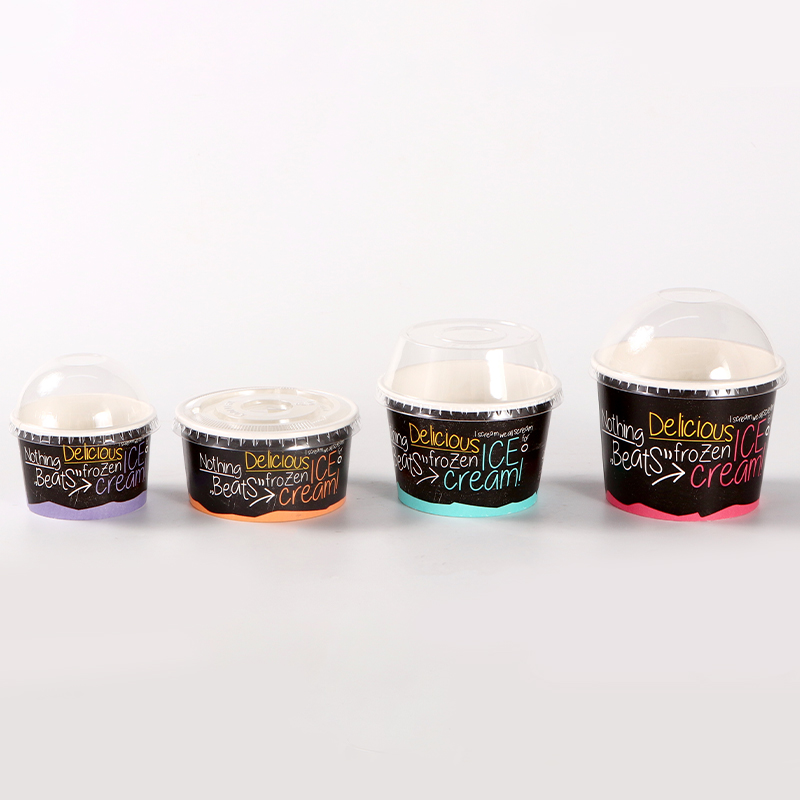
Do You Need Ice Cream Cups With Lids?
Ice cream cups with lids are essential if you offer takeaway, delivery, or pre-packed dessert cups for events. The type of lid matters as much as the cup itself.
- Flat lids are inexpensive and stack neatly, which suits pre-filled cups that go straight into the freezer.
- Domed lids leave room for whipped cream, candies, and tall toppings without crushing them.
- Lids with a spoon slot let customers eat directly without removing the lid, which is handy for kids and quick snacks.
- Vented lids help prevent pressure build-up and condensation, useful if cups sit in a delivery bag for a while.
Always confirm that the lid fits the cup rim exactly. A lid that is even slightly off can pop open during transport or let air in, which leads to freezer burn.
Key Features to Check Before You Buy in Bulk
Once you've settled on material and size, look closely at the details that separate a good cup from a frustrating one:
- Food-grade certification: make sure the cups meet food safety standards in your country, such as FDA or LFGB compliance.
- Freezer-safe design: some cups become brittle at low temperatures, so confirm they can handle storage at around -18°C (0°F).
- Rim strength: a rolled or reinforced rim prevents bending when customers hold the cup or you press on a lid.
- Stackability: cups that nest tightly save storage space and speed up service at the counter.
- Print quality: if you want a custom logo, ask for a printed sample, since colors can look different on paper versus a screen.
- Minimum order quantity: custom printed cups often require orders of several thousand pieces, so plan your cash flow and storage first.
Common Mistakes When Buying Disposable Ice Cream Cups
Choosing Only by Price
The cheapest cups can cost you more in the end. Thin walls may leak or sweat, leading to messy hands, unhappy customers, and wasted product. A cup that costs two cents more but never fails is usually the better deal.
Ignoring Storage Space
Bulk orders arrive in large cartons. Before you buy 10,000 cups, make sure you have a dry, clean place to keep them away from moisture and strong odors. Paper cups in particular can absorb smells and humidity.
Skipping the Sample Test
Always test a sample batch. Fill a cup, leave it on the counter for ten minutes, and check for sogginess, leaks, and rim bending. Then put a filled cup with a lid in the freezer overnight and see how it looks the next day.
Tips to Reduce Waste and Save Money
Even though these cups are single-use, you can still control costs and reduce waste with a few simple habits:
- Standardize your sizes so staff don't grab a larger cup for a small portion.
- Use portion scoops so each serving fits the cup properly and doesn't overflow.
- Buy in bulk from the same supplier to get better unit prices, but only after you've tested a small batch.
- Offer a small discount to customers who skip the lid or spoon when eating in, which cuts supply costs.
- Set up clear recycling or composting bins if you use paper or compostable cups, so the material is actually processed correctly.
Final Thoughts on Choosing Disposable Ice Cream Cups
The best disposable ice cream cups match your product, your customers, and your budget. Paper cups work well for classic scoop shops, clear plastic suits layered desserts, and compostable options appeal to brands that want to show their environmental side. Pay attention to size, lids, freezer performance, and rim strength, and always test samples before placing a big order. A little research now means fewer leaks, happier customers, and less money wasted on supplies that don't do their job.
Custom Packaging Made Easy
From concept to delivery, our team ensures your custom packaging needs are met with efficient communication and professional service.
-
 01
Briefing
-

-
 02
Material & Structure
-
-
 03
Artwork & Printing
-
-
 04
Sampling
-
-
 05
Testing & Approval
-
-
 06
Production & Delivery
-
-
Suzhou Accum Packaging Co., Ltd.
Contact us
TEL: +86 512 6378 6312 TEL: +86 182 6183 5029 Add: Zhujiabang, Zhenze Town, Wujiang District, Suzhou city, Jiangsu Province, China -
Quick Link
Home Products About Us Solutions News Contact Us -
Products Links
Paper Cup Paper Container Retail Shelf Packaging Paper Tray Paper Bucket Accessory Latest Stainless Bottle -
News
Disposable Ice Cream Cups: How to Pick the Right Ones and Stop Wasting Money Single Wall Coffee Cups: A Simple Guide to Picking the Right Ones Halloween is coming -
Mobile
