
 English
 中文简体
中文简体 Español

Paper Soup Containers: The Complete Buyer's Guide for Restaurants and Food Businesses
Content
- 1 What Is a Paper Soup Container and Why Does It Matter?
- 2 Common Types of Paper Soup Containers
- 3 Sizes Available and What Each Is Best For
- 4 Coating Materials: PE vs. PLA — What's the Difference?
- 5 Leak-Proof Performance: What Actually Prevents Spills?
- 6 Eco-Friendly Paper Soup Containers: What to Look For
- 7 Lids for Paper Soup Containers: Matching the Right Cover
- 8 Custom Printing on Paper Soup Containers
- 9 How to Choose the Right Paper Soup Container for Your Business
What Is a Paper Soup Container and Why Does It Matter?
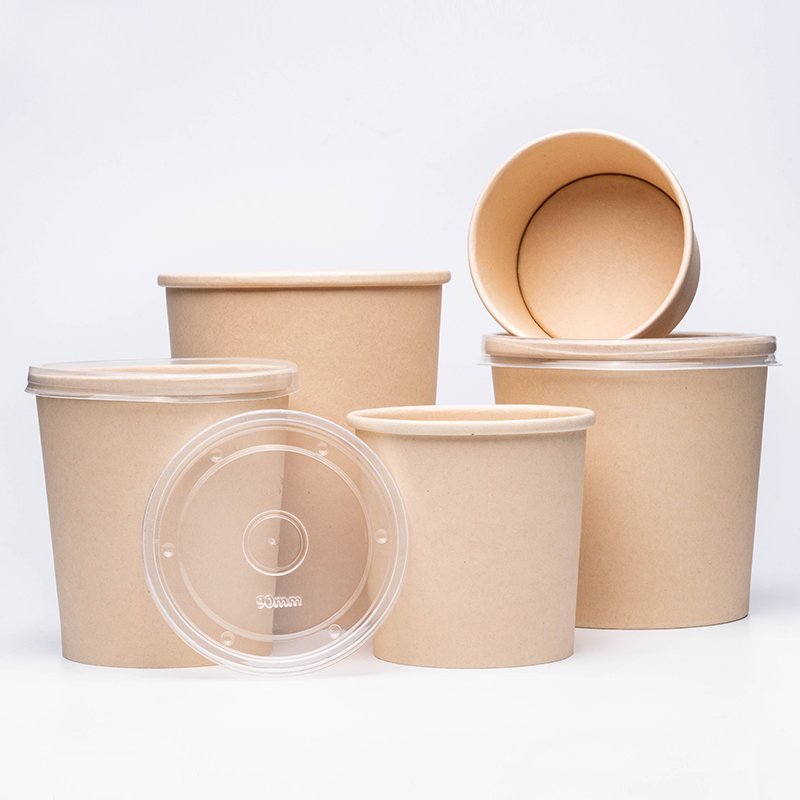
A paper soup container is a single-use cup or bowl made primarily from paperboard, typically coated with a thin layer of polyethylene (PE) or plant-based PLA to make it liquid-resistant. These containers are widely used in restaurants, delis, food trucks, cafeterias, and meal prep delivery services to serve hot soups, broths, stews, ramen, and other liquid-heavy dishes on the go.
While they may look simple, not all paper soup containers are built the same. The coating material, wall construction, lid compatibility, and size all affect how well a container holds up under heat, how long it keeps food warm, and whether it qualifies as eco-friendly. Choosing the wrong type can lead to leaks, soggy bottoms, customer complaints, and even liability issues. Getting it right, on the other hand, keeps your operation running smoothly and makes a strong impression on customers.
Common Types of Paper Soup Containers
Paper soup containers come in several structural formats, each designed for different service situations. Understanding the differences helps you match the container to your actual use case rather than just defaulting to whatever is cheapest.
Single-Wall Paper Soup Cups
These are the most basic and affordable option. A single layer of coated paperboard forms the cup wall. They work well for short-hold times and counter service where the customer picks up and eats immediately. However, the thin wall transfers heat quickly, making it uncomfortable to hold a very hot soup for more than a minute or two without a sleeve or carrier.
Double-Wall Paper Soup Containers
Double-wall construction uses two layers of paperboard with an air gap in between, acting as insulation. This keeps the soup hotter longer and makes the container much more comfortable to hold bare-handed. Double-wall paper soup bowls are the go-to choice for delivery services, pop-up stalls, and anywhere customers carry their food for more than a few minutes.
Paper Soup Bowls with Flat or Vented Lids
These are wider, bowl-shaped containers designed to hold larger portions and pair with a flat or dome-style lid. The wider opening makes them better for chunky soups like clam chowder, pho, or vegetable stew where you need a spoon to eat right out of the container. Vented lids allow some steam to escape, reducing condensation buildup inside the lid that can drip back into the soup.
Noodle Boxes and Deep Paper Soup Cups
Tall, deep paper cups designed for ramen, udon, and noodle soups have become popular in Asian-style fast casual restaurants. These typically feature a taller wall to accommodate noodles and a snug-fitting lid. The depth helps retain heat and prevents sloshing during transport.
Sizes Available and What Each Is Best For
Paper soup containers are typically sold in fluid ounce (oz) sizes. Here is a breakdown of the most common sizes and their ideal use cases:
|
Size |
Volume |
Best Use |
|
Small |
8 oz |
Soup as a side, tasting portions, kids' menu |
|
Medium |
12 oz |
Standard single-serving lunch portion |
|
Large |
16 oz |
Full meal serving, noodle soups, delivery orders |
|
Extra Large |
24–32 oz |
Family-size takeout, catering, bulk orders |
When choosing a size, factor in not just the soup volume but also how much space noodles, toppings, or garnishes will take up. A 12 oz container for ramen that is already half-filled with noodles will overflow when you add broth.
Coating Materials: PE vs. PLA — What's the Difference?
The liquid resistance of a paper soup container comes from its coating. The two most common options are polyethylene (PE) and polylactic acid (PLA), and they behave very differently.
- PE-coated paper soup containersuse a thin plastic film bonded to the paperboard. PE coating is highly effective at preventing leaks and holds up well against hot liquids. However, this plastic lining makes the container difficult to recycle and ineligible for industrial composting. Most standard disposable soup cups on the market use PE coating.
- PLA-coated paper soup containersuse a bioplastic derived from cornstarch or sugarcane. PLA-coated cups are certified compostable under ASTM D6400 standards and can be processed at industrial composting facilities. They perform similarly to PE at temperatures up to about 110°F (43°C) but can warp or soften above that threshold, which is a concern with very hot soups served above 185°F. Always verify the heat tolerance rating before purchasing PLA containers for high-temperature applications.
If your municipality has industrial composting infrastructure and your facility participates in a composting program, PLA is a meaningful environmental upgrade. If composting is not available in your area, PLA containers will likely end up in landfill alongside PE ones, offering little real-world ecological benefit.
Leak-Proof Performance: What Actually Prevents Spills?
Leak resistance in a paper soup container depends on more than just the coating. Three factors work together to keep liquid inside the cup:
- Seam construction:The bottom seam is the most common failure point. Look for containers with a heat-sealed or double-crimped seam at the base. Poorly constructed seams will wick liquid through the paperboard fibers and cause leaks within minutes.
- Lid fit:A loose-fitting lid is a spill waiting to happen. Tight snap-on lids with a raised rim that locks against the container rim are the most reliable. Flat peel-back lids are convenient but provide less security during transport.
- Coating integrity:Nicks, scuffs, or manufacturing defects in the coating allow liquid to penetrate the paper layer. Buying from reputable manufacturers with consistent quality control reduces this risk significantly.
For delivery orders specifically, always test your containers by filling them, applying the lid, and placing them in your delivery bag at a tilt for at least 15 minutes before committing to a bulk order. Real-world conditions reveal problems that a spec sheet will not.
Eco-Friendly Paper Soup Containers: What to Look For
Sustainability claims in food packaging are common but often misleading. Here is how to evaluate whether a paper soup container is genuinely eco-friendly:
Certifications That Actually Mean Something
- BPI Certified Compostable:Certifies that the product meets ASTM D6400 standards and will break down in an industrial composting facility within 90–180 days.
- FSC Certified:The Forest Stewardship Council certification confirms that the paperboard was sourced from responsibly managed forests. This addresses the sustainability of raw material sourcing, not end-of-life disposal.
- PFAS-Free:Some food packaging uses per- and polyfluoroalkyl substances (PFAS) as grease and moisture barriers. PFAS chemicals are persistent environmental contaminants. Look for explicitly PFAS-free labeling, especially if your state has regulations banning them in food service packaging.
Recyclability: The Reality Check
Most paper soup containers — even those labeled "paper" — are not accepted in curbside recycling programs because the plastic coating contaminates the paper recycling stream. The practical eco-friendly path for most businesses is industrial composting (with PLA containers) or waste reduction programs that focus on cup reuse for dine-in customers.
Lids for Paper Soup Containers: Matching the Right Cover
Lid compatibility is one of the most overlooked factors when purchasing paper soup containers. Not all lids fit all containers, and manufacturers use different rim diameters even within the same fluid ounce size range. Always confirm lid compatibility before ordering, especially when switching suppliers.
|
Lid Type |
Features |
Best For |
|
Flat snap-on |
Secure fit, low profile |
Broth-based soups, delivery |
|
Dome lid |
Extra headroom for toppings |
Chunky soups, garnished bowls |
|
Vented lid |
Steam release hole |
Very hot soups, condensation control |
|
Fold-back tab lid |
Easy opening tab |
Counter service, quick access |
|
No lid (open top) |
Immediate consumption |
Cafeteria lines, eat-in service |
Custom Printing on Paper Soup Containers
Custom-printed paper soup containers serve as mobile advertising every time a customer walks out the door with your branding on their lunch. For businesses ordering at sufficient volume, custom printing is more affordable than many operators expect.
Minimum Order Quantities (MOQs)
Most manufacturers require a minimum order of 5,000 to 25,000 units for custom-printed paper soup containers. Some specialty suppliers offer short-run digital printing starting at 500 units, though the per-unit cost is significantly higher. If you are a small operator, consider joining a group purchasing cooperative or using a stock container with a custom label sleeve as a cost-effective alternative.
Print Methods and What They Look Like
- Flexographic printingis the standard for high-volume runs. It produces vibrant, consistent results and is cost-effective at scale. Best for logos, brand colors, and simple patterns.
- Digital printingworks well for shorter runs and designs with photographic detail or gradient colors. The per-unit cost is higher but setup costs are minimal.
- Embossing or texture printingadds a premium tactile feel and is used by upscale restaurants and catering companies looking to elevate their packaging presentation.
How to Choose the Right Paper Soup Container for Your Business
Rather than buying based on price alone, use these practical criteria to narrow down your options:
- Service type:Dine-in service can use thinner single-wall cups since hold time is short. Delivery and takeout demand double-wall insulation and secure-fitting lids.
- Soup temperature:Soups served above 180°F require containers rated for high heat. Check the manufacturer's temperature rating; PLA containers typically max out around 110°F ambient, while PE containers tolerate hot fill temperatures up to 200°F.
- Portion size and soup type:Broth-only soups can use taller, narrower cups. Chunky stews and noodle soups need wider bowls with dome lids and enough internal volume to avoid overflow when toppings are added.
- Environmental goals:If your business is committed to sustainability and your area has industrial composting, invest in BPI-certified PLA-coated paper soup bowls. If composting is not available locally, focus on reducing overall packaging volume instead.
- Budget:Calculate cost per serving, not just cost per case. A cheaper container that causes one customer complaint, a refund, or a delivery bag ruined by a leak costs far more than the savings per unit.
Custom Packaging Made Easy
From concept to delivery, our team ensures your custom packaging needs are met with efficient communication and professional service.
-
 01
01
Briefing
-

-
 02
02
Material & Structure
-
-
 03
03
Artwork & Printing
-
-
 04
04
Sampling
-
-
 05
05
Testing & Approval
-
-
 06
06
Production & Delivery
-
-
Suzhou Accum Packaging Co., Ltd.
Contact us
TEL: +86 512 6378 6312 TEL: +86 182 6183 5029 Add: Zhujiabang, Zhenze Town, Wujiang District, Suzhou city, Jiangsu Province, China -
Quick Link
Home Products About Us Solutions News Contact Us -
Products Links
Paper Cup Paper Container Retail Shelf Packaging Paper Tray Paper Bucket Accessory Latest Stainless Bottle -
News
8oz Paper Cups: Sizes, Types, Uses & How to Buy the Right Ones Double Wall Paper Cup: Do You Really Need One for Your Coffee Shop? The Complete Round Paper Bowl Buying Guide for Home and Business Use -
Mobile
