
 English
 中文简体
中文简体 Español

A Practical Guide to Choosing the Right Molded Fiber Eco Lid for Food Service Applications
Content
- 1 What Is a Molded Fiber Eco Lid and How Is It Made?
- 2 Why the Food Industry Is Moving to Molded Fiber Eco Lids
- 3 Common Fiber Sources Used in Molded Fiber Eco Lids
- 4 How Molded Fiber Eco Lids Perform in Real Food Service Conditions
- 5 Molded Fiber Eco Lid vs. Other Lid Types: A Direct Comparison
- 6 Applications Where Molded Fiber Eco Lids Are Making the Biggest Impact
- 7
- 8 Key Certifications to Look for on a Molded Fiber Eco Lid
- 9 Practical Buying Guide: How to Choose the Right Molded Fiber Eco Lid
- 10 Challenges and Limitations to Be Aware Of
- 11 The Future of Molded Fiber Eco Lids: Where the Technology Is Heading
What Is a Molded Fiber Eco Lid and How Is It Made?
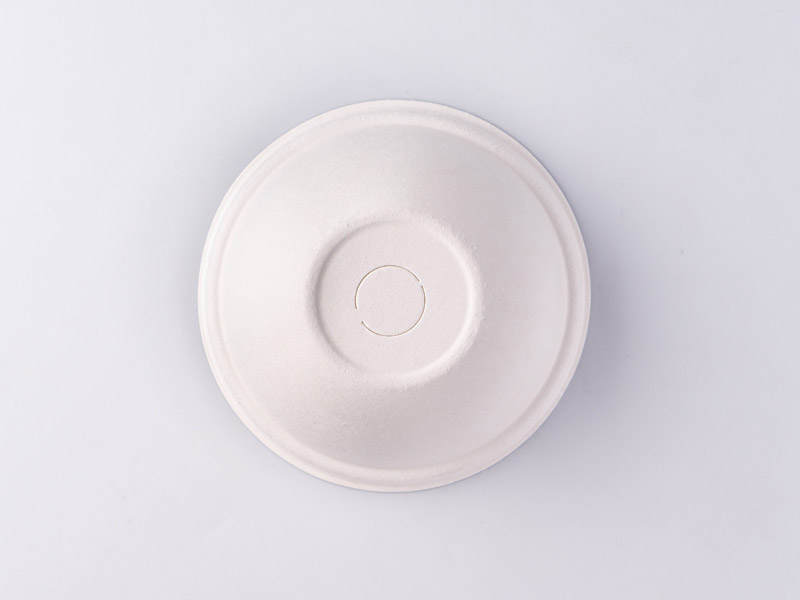
A molded fiber eco lid is a cover or cap formed from pulped plant-based fiber — typically recycled paper, sugarcane bagasse, bamboo, or wheat straw — that is shaped into a three-dimensional lid form using a wet molding or thermoforming process. Unlike a flat sheet of paperboard that is cut and folded into a lid shape, a molded fiber eco lid is formed as a single integrated piece, which gives it structural rigidity, a precise fit, and a surface contour that flat-cut paper lids simply cannot achieve.
The manufacturing process begins with a water-based fiber slurry. Raw fiber — sourced from recycled cardboard, virgin sugarcane pulp, bamboo pulp, or a blend — is mixed with water to create a thick slurry. This slurry is pressed onto a mesh mold shaped to the exact geometry of the finished lid. A vacuum pulls the water through the mesh, leaving behind a wet fiber mat in the form of the mold. The wet form is then either air-dried (for wet-pressed products) or transferred to a heated die set where it is compressed and dried simultaneously under pressure — a process known as thermoformed or hot-pressed molded fiber. Hot-pressing produces a denser, smoother surface finish that is far better suited to food contact applications, printing, and moisture-resistant coatings than the rougher texture of air-dried wet-pressed fiber.
The result is a lid that is dimensionally consistent, naturally rigid, and inherently biodegradable. No adhesives, staples, or mechanical fasteners are used — the fiber bonds to itself through the hydrogen bonding of cellulose during drying. When a water-resistant or grease-resistant coating is required, it is applied either during the pulping stage as a wet-end additive or as a surface coating after forming, using water-based or bio-based barrier compounds. The finished molded fiber eco lid is a single-material, fiber-based product that can be composted, and in many markets, recycled alongside cardboard and paper.
Why the Food Industry Is Moving to Molded Fiber Eco Lids
The shift toward molded fiber eco lids in the food and beverage sector is being driven by a convergence of regulatory pressure, retailer sustainability commitments, and genuine consumer preference for packaging that feels natural and environmentally responsible. Understanding these drivers helps explain why molded fiber eco lids are appearing across coffee shops, quick-service restaurants, food delivery platforms, and supermarket prepared food sections at an accelerating pace.
Regulatory pressure is perhaps the most immediate driver. Single-use plastics legislation in the European Union, the United Kingdom, Canada, and a growing number of US states has either banned or heavily taxed plastic lids on food service cups and containers. Conventional plastic lids — made from polystyrene, polypropylene, or PET — are directly in the crosshairs of these regulations. Molded fiber eco lids, as a certified compostable or recyclable alternative, allow food businesses to remain compliant without sacrificing the functional protection that a lid provides.
Consumer perception plays a real commercial role too. Research consistently shows that consumers associate fiber-based, natural-textured packaging with quality, care, and environmental responsibility. A molded fiber eco lid communicates these values instantly at the point of use, without any labeling required. For premium food brands, independent coffee shops, and farm-to-table restaurants, the tactile and visual quality of a molded fiber lid also aligns with brand positioning in a way that a transparent plastic lid never can.
Common Fiber Sources Used in Molded Fiber Eco Lids
The fiber source used in a molded fiber eco lid affects its mechanical strength, surface smoothness, moisture resistance, color, and environmental credentials. Here is a breakdown of the most commonly used fiber types:
|
Fiber Source |
Key Characteristics |
Best Suited For |
|
Recycled Cardboard / OCC |
Low cost, widely available, brown/gray appearance |
Industrial lids, outer packaging covers |
|
Sugarcane Bagasse |
Smooth surface, cream/off-white, food-contact grade, strong |
Hot and cold drink lids, food container covers |
|
Bamboo Pulp |
Fast-growing crop, fine fiber, good surface quality |
Premium food service lids, specialty packaging |
|
Wheat Straw |
Agricultural by-product, off-white to light tan |
Food trays, bowl lids, takeaway containers |
|
Virgin Wood Pulp |
Brightest white, finest fiber, premium feel |
High-end food service, printed eco lids |
|
Blended / Mixed Fiber |
Tunable properties, cost-performance balance |
General food service, volume applications |
How Molded Fiber Eco Lids Perform in Real Food Service Conditions
Performance is the non-negotiable criterion for any food packaging lid. A molded fiber eco lid must protect the food or beverage it covers, maintain its structural integrity during service and transport, and function reliably for the consumer. Here is how molded fiber eco lids measure up across the key performance dimensions:
Heat Resistance for Hot Beverages
Hot-pressed molded fiber eco lids designed for hot beverage applications can withstand sustained contact with beverages up to 95°C (203°F) without deforming or losing structural integrity. The dense, low-porosity surface achieved through thermoforming limits steam penetration, and water-based barrier treatments applied to the inner surface of the lid prevent condensation from softening the fiber over the typical 20–30 minute service window of a takeaway hot drink. This makes molded fiber eco lids a viable replacement for PE-coated paperboard lids and plastic lids on coffee, tea, hot chocolate, and other hot drink applications.
Cold and Iced Drink Applications
Cold beverages present a different challenge — condensation on the outside of the cup can transfer moisture to the lid, particularly in humid environments. Molded fiber eco lids for cold drink applications typically include a moisture-resistant outer coating and are designed with a raised or ribbed outer surface that minimizes direct contact between the consumer's hand and the moisture-exposed surface. Straw holes or perforated opening tabs are molded directly into the lid form, eliminating the need for secondary punching operations. Lids for cold drinks are generally tested to maintain performance for up to 60 minutes of ice-filled beverage contact.
Seal Integrity and Leak Prevention
One of the most critical functional requirements for any food service lid is a secure, leak-resistant fit on the cup or container rim. Molded fiber eco lids achieve this through precision molding — the inner rim of the lid is formed to match the outer rim diameter and profile of the specific cup or container it is designed for. Leading manufacturers use finite element analysis (FEA) to model lid-to-rim engagement forces during the design phase, ensuring that the snap or press fit is secure enough to prevent accidental removal during handling, but not so tight that consumers struggle to open the lid.
Grease and Oil Resistance for Food Containers
For food container lids covering burger boxes, noodle bowls, salad containers, or hot food trays, grease resistance is essential to prevent oil migration from staining, weakening, or penetrating the fiber. Molded fiber eco lids for food container applications incorporate either PFAS-free fluorine-free grease barriers applied as wet-end additives during pulping, or bio-based surface coatings applied post-forming. These treatments provide sufficient grease holdout for most food service applications while maintaining the lid's compostability credentials — a crucial distinction from PFAS-based treatments, which are being phased out globally due to health and environmental concerns.
Molded Fiber Eco Lid vs. Other Lid Types: A Direct Comparison
Understanding how a molded fiber eco lid stacks up against plastic lids, flat-cut paper lids, and PLA-coated paperboard lids is essential for making an informed packaging decision:
|
Feature |
Molded Fiber Eco Lid |
Plastic Lid (PP/PS) |
PLA-Coated Paper Lid |
|
Compostable |
Yes (industrial & home) |
No |
Industrial only |
|
Plastic-free |
Yes |
No |
Partially (PLA layer) |
|
Structural rigidity |
High (3D molded form) |
Very high |
Moderate |
|
Moisture resistance |
Good (coated grades) |
Excellent |
Good |
|
Custom printable |
Yes (hot-pressed surface) |
Limited |
Yes |
|
Microplastic risk |
None |
Yes |
Low (PLA layer) |
|
Regulatory compliance |
Favorable globally |
Restricted in many markets |
Under scrutiny |
|
Consumer perception |
Premium / eco-positive |
Negative / outdated |
Neutral to positive |
|
Cost vs. plastic |
1.5–3x higher |
Baseline (lowest) |
1.2–2x higher |
Applications Where Molded Fiber Eco Lids Are Making the Biggest Impact
Molded fiber eco lids are well suited to a wide and growing range of food and beverage applications. The following are the sectors and packaging formats where molded fiber eco lids are delivering the most visible impact:
- Takeaway coffee and hot drink cups:Coffee shops and beverage chains are among the highest-volume users of disposable lids globally. Molded fiber eco lids designed for standard cup rim sizes (80mm, 90mm, and 104mm) are now available from multiple manufacturers and are being adopted by independent cafés and major chains alike as a direct replacement for polystyrene and polypropylene lids.
- Noodle bowls and Asian cuisine containers:The dome-shaped or flat molded fiber eco lid is a natural fit for noodle boxes, ramen containers, and poke bowls. The three-dimensional molding allows for a secure rim lock and adequate interior clearance to prevent the lid from pressing down on the food contents.
- Soup and liquid food cups:Molded fiber eco lids with integrated drinking spouts or tear-away tabs are replacing plastic lids on soup cups and broth-based hot meals in food courts, hospitals, and catering operations. The lid's natural thermal insulation properties also reduce heat transfer to the consumer's hand.
- Deli and prepared food containers:Supermarket deli counters, salad bars, and prepared food sections are transitioning to molded fiber container-and-lid systems where both the tray and the lid are made from the same fiber material, creating a fully compostable single-material packaging unit.
- Event and festival catering:Large outdoor events, music festivals, and stadium food service operations generate enormous volumes of disposable packaging. Molded fiber eco lids are increasingly specified for these events because they are compostable on-site, lighter than plastic to transport in bulk, and align with the sustainability commitments that events are required to demonstrate to secure permits in many jurisdictions.
- Healthcare and institutional meal service:Hospital meal trays, care home portion containers, and canteen food cups use molded fiber eco lids where hygiene, food safety, and waste management are all priorities. The non-plastic, fiber-based construction also reduces the risk of plastic contamination in clinical waste streams.
Key Certifications to Look for on a Molded Fiber Eco Lid
Sustainability claims on packaging are only meaningful if backed by credible third-party certifications. When evaluating a molded fiber eco lid, the following certifications provide verifiable assurance across the dimensions that matter most:
- OK Compost Industrial (TÜV Austria):Confirms that the complete lid — including any coatings, inks, or additives — biodegrades fully in an industrial composting facility within 12 weeks at temperatures above 58°C. This is the most widely required compostability certification for food service packaging in Europe and is increasingly recognized by composting facilities in North America and Asia-Pacific.
- OK Compost HOME (TÜV Austria):A stricter certification confirming biodegradation at ambient home compost conditions, as low as 20°C. Fiber-based lids without plastic coatings can often achieve home compostability, making this certification valuable in markets where industrial composting infrastructure is limited or consumer home composting rates are high.
- BPI Certification (North America):The Biodegradable Products Institute certification is the North American standard for industrial compostability. It is required by many US and Canadian composting facilities as a condition for accepting packaging in their organic waste streams.
- FSC or PEFC Certification:If the molded fiber eco lid uses virgin wood or bamboo pulp, FSC (Forest Stewardship Council) or PEFC (Programme for the Endorsement of Forest Certification) certification confirms that the fiber comes from responsibly managed forests where biodiversity, worker rights, and regeneration are protected.
- Food Contact Safety Compliance:Any lid used in direct food contact must comply with applicable food contact material regulations — EU Regulation 10/2011 for plastic components, EU Framework Regulation 1935/2004 for food contact materials generally, and FDA 21 CFR for the US market. Ensure the supplier provides migration testing data and a declaration of compliance for the specific food contact application.
- PFAS-Free Declaration:With PFAS phase-outs underway in the EU and US, verify that any grease-resistant treatment on the molded fiber eco lid is explicitly PFAS-free. Ask for a written declaration and, where possible, supporting test data rather than relying on verbal assurances.
Practical Buying Guide: How to Choose the Right Molded Fiber Eco Lid
Selecting the correct molded fiber eco lid for your application requires attention to several specific parameters. Working through this checklist before contacting suppliers will save significant time and reduce the risk of ordering lids that don't perform as expected in your operation.
Match the Lid to Your Container Rim Profile
Molded fiber eco lids are produced to fit specific cup or container rim diameters and rim profiles. Common food service cup lid sizes range from 80mm for small espresso cups to 104mm for large takeaway cups, with 90mm being the most widely used standard. However, rim profile — the shape of the lip that the lid snaps or presses onto — varies between cup manufacturers, and a lid sized for one brand's 90mm cup may not fit another brand's 90mm cup correctly. Always measure the outer rim diameter of your container and request samples from the supplier to physically test the fit before placing a bulk order.
Specify the Barrier Treatment for Your Food or Drink Type
Not every molded fiber eco lid needs the same level of barrier treatment. A lid for a dry snack container needs only basic moisture resistance, while a lid for a hot soup cup needs liquid holdout, steam resistance, and potentially grease resistance. Specify clearly what the lid will be in contact with, for how long, and at what temperature — and ask the supplier to confirm which barrier treatment grade is appropriate. Over-specifying a barrier treatment increases cost unnecessarily; under-specifying it leads to performance failures in service.
Confirm Minimum Order Quantities and Lead Times
Molded fiber eco lids require custom tooling for each lid shape and size, which means minimum order quantities (MOQs) are typically higher than for flat-cut paper lids. Standard off-the-shelf sizes from established manufacturers may have MOQs as low as 5,000–10,000 units per SKU, but custom shapes or sizes can require MOQs of 50,000 units or more to amortize tooling costs. Lead times for custom tooling can run from 6 to 14 weeks, so plan your transition timeline accordingly and factor in time for sample evaluation and approval.
Evaluate the Supplier's Quality Consistency
Dimensional consistency is critical in molded fiber eco lids — even small variations in the rim diameter or profile of the lid can cause fit failures on high-speed filling lines or create loose-fitting lids that consumers find frustrating. Ask prospective suppliers for their tolerance specifications on key dimensions and for quality control data from recent production runs. Reputable manufacturers will provide dimensional tolerance data and should be able to demonstrate that their process is capable of holding tolerances within ±0.3mm on critical fit dimensions.
Challenges and Limitations to Be Aware Of
Molded fiber eco lids are a compelling and increasingly mature technology, but they are not without limitations. Being clear-eyed about these constraints helps businesses plan transitions realistically and avoid costly surprises.
- Higher unit cost than plastic:Molded fiber eco lids currently cost more per unit than equivalent plastic lids, largely due to higher raw material costs, more energy-intensive manufacturing, and the cost of tooling amortized over production runs. For high-volume operations, this premium is increasingly justifiable through reduced plastic tax liabilities, EPR fee savings, and brand value — but it represents a real line item in packaging budgets that must be planned for.
- Limited performance in prolonged liquid contact:While coated molded fiber eco lids perform well for typical food service hold times, they are not suitable for extended storage of liquid-heavy products or for applications where the lid will be in prolonged contact with liquid. For these use cases, multi-layer fiber constructions with more robust barrier coatings are needed, which increases cost further.
- Heavier than plastic per unit:Molded fiber eco lids are heavier than their plastic equivalents — typically 3–5 times heavier for a comparable size lid. This adds weight to shipments, increases transport costs per case, and takes up more storage space per unit. For businesses operating on thin logistics margins, this must be factored into the total cost of ownership calculation.
- Composting infrastructure dependency:A molded fiber eco lid's environmental benefit is fully realized only if it ends up in a composting stream. In markets where organic waste separation and composting infrastructure are underdeveloped, the compostable lid may end up in landfill. Brands and food operators should proactively communicate correct disposal to consumers and, where possible, partner with composting operators to create on-site diversion programs.
- Customization lead times:The tooling-dependent nature of molded fiber production means that custom lid shapes, sizes, and surface embossing require significant upfront development time and investment. Businesses that need rapid packaging changes or frequent SKU iterations will find molded fiber less agile than flat-cut paper or plastic alternatives.
The Future of Molded Fiber Eco Lids: Where the Technology Is Heading
The molded fiber eco lid market is in active development across materials science, manufacturing efficiency, and functional design. Several trends are converging to make these lids more capable, more affordable, and more widely applicable over the next five years.
Advanced barrier technologies are expanding the performance ceiling. Water-based barrier coatings incorporating nanocellulose, mineral platelet structures, and bio-based polymers such as PHA and starch blends are improving the moisture and oxygen barrier of molded fiber eco lids to levels previously only achievable with plastic laminates. These coatings maintain compostability certifications while closing the performance gap with conventional plastic-coated alternatives — particularly for high-moisture or long-duration food contact applications.
Manufacturing automation is reducing production costs. Investment in automated molding lines, faster cycle times, and AI-driven quality inspection systems is steadily lowering the cost of producing molded fiber eco lids at scale. As production volumes grow — driven by regulatory mandates and brand commitments — the cost premium over plastic is expected to narrow significantly through the late 2020s, reaching near cost parity with PLA-coated paper lids in high-volume categories.
Design innovation is opening new functional possibilities. Three-dimensional molding allows lid designers to incorporate features that are impossible in flat-cut paper lids: integrated locking tabs, ribbed grips, stackable profiles, venting channels, and embossed branding elements. As the design language of molded fiber eco lids matures, they will increasingly function not just as sustainable replacements for plastic, but as premium packaging components that add tactile and visual value to the food service experience in their own right.
Custom Packaging Made Easy
From concept to delivery, our team ensures your custom packaging needs are met with efficient communication and professional service.
-
 01
01
Briefing
-

-
 02
02
Material & Structure
-
-
 03
03
Artwork & Printing
-
-
 04
04
Sampling
-
-
 05
05
Testing & Approval
-
-
 06
06
Production & Delivery
-
-
Suzhou Accum Packaging Co., Ltd.
Contact us
TEL: +86 512 6378 6312 TEL: +86 182 6183 5029 Add: Zhujiabang, Zhenze Town, Wujiang District, Suzhou city, Jiangsu Province, China -
Quick Link
Home Products About Us Solutions News Contact Us -
Products Links
Paper Cup Paper Container Retail Shelf Packaging Paper Tray Paper Bucket Accessory Latest Stainless Bottle -
News
The Complete Round Paper Bowl Buying Guide for Home and Business Use Paper Cup Holder: How to Pick the Right One Without the Guesswork Why Does My Paper Straw Get Soggy So Fast? (And Other Paper Straw Questions Answered) -
Mobile
