
 English
 中文简体
 Español


Ice Cream Paper Cup: What Size, Material, and Lid Do You Really Need?
If you run an ice cream shop, a dessert cart, a cafe, or even a catering business, the ice cream paper cup you choose affects more than looks. It decides how long your scoops stay frozen, whether the cup gets soggy, how your brand looks in a customer's photo, and how much you spend on packaging each month. This guide covers sizes, materials, lids, printing, and common mistakes, so you can order paper ice cream cups with confidence.
Content
- 1 Why More Shops Are Switching to Paper Ice Cream Cups
- 2 Ice Cream Paper Cup Sizes and What They Actually Hold
- 3 Materials and Coatings: What Keeps the Cup From Getting Soggy
- 4 How to Check the Quality of a Paper Ice Cream Cup Before You Buy
- 5 Single-Wall vs Double-Wall Ice Cream Cups
- 6 Lids, Spoons, and Add-Ons That Make the Cup Work Better
- 7 Custom Printed Ice Cream Paper Cups for Branding
- 8 How to Estimate Cost and Order the Right Quantity
- 9 Storage and Usage Tips for Paper Ice Cream Cups
- 10 Common Mistakes to Avoid When Buying Ice Cream Paper Cups
- 11 Final Thoughts on Choosing the Right Ice Cream Paper Cup
Why More Shops Are Switching to Paper Ice Cream Cups
A paper ice cream cup is a disposable cup made from food-grade paperboard with a thin coating on the inside that keeps liquid from soaking through. Compared with plastic or foam, paper cups feel more natural in the hand, are easy to print on, and match the eco-friendly image many customers now expect. Many local rules also restrict foam containers, which pushes more businesses toward paper.
Paper ice cream bowls and cups also stack neatly, take up little storage room, and are light to ship. For a small shop, that means less storage space and lower freight costs. For a mobile vendor, it means you can carry hundreds of servings in a single box.
Ice Cream Paper Cup Sizes and What They Actually Hold
Size is the first decision, and it is easy to get wrong because cup sizes are listed in ounces while scoops are measured differently. As a rule of thumb, leave a little room at the top so the ice cream does not overflow when you add toppings or sauce. The table below shows common sizes and how they are typically used.
| Cup Size | Approx. Volume | Best For |
| 3 oz | 90 ml | Free samples, kids' mini servings |
| 4 oz | 120 ml | Single scoop, gelato tasting |
| 8 oz | 240 ml | Double scoop, sundaes |
| 12 oz | 360 ml | Large sundaes, shakes, toppings |
| 16 oz | 480 ml | Take-home portions, sharing cups |
| 32 oz | 960 ml | Pints and family tubs |
If you are unsure, order two neighboring sizes first, such as 4 oz and 8 oz, and test them with your real portions. Many owners find that a slightly smaller cup makes a serving look generous while keeping food cost under control.
Materials and Coatings: What Keeps the Cup From Getting Soggy
Ice cream melts, and melted ice cream is mostly liquid and fat. The coating inside the cup is what stands between that liquid and a soft, leaking wall. Ask your supplier exactly what coating is used, because it affects performance, price, and how the cup can be disposed of.
PE-Coated Paper Cups
Polyethylene (PE) is the most common coating. It is affordable, handles cold and wet contents well, and works with almost any printing style. The downside is that PE-lined cups are harder to recycle in many areas, since the plastic film has to be separated from the paper.
PLA-Coated Paper Cups
PLA is a plant-based lining, often made from corn starch. It suits shops that want a compostable ice cream paper cup, but it generally costs more and is only compostable in industrial facilities, not in a backyard bin. It also tolerates heat less well, so it is best for cold desserts rather than hot toppings like fresh fudge.
Water-Based Coatings
Water-based barrier coatings are newer and are designed to make cups easier to recycle with paper. They work well for fast-serving shops, but check the supplier's test data for how long the cup holds up with melting ice cream before ordering large volumes.
How to Check the Quality of a Paper Ice Cream Cup Before You Buy
Photos and price lists do not tell you how a cup behaves in a busy shop. Always request samples and run a few simple tests at your own counter. The checklist below takes about thirty minutes and can save you from a bad bulk order.
Fill a cup with ice cream and leave it for 30 to 40 minutes. Check the outside wall for dampness or softening.
Squeeze the cup gently with one hand. A good cup should resist denting instead of collapsing.
Look at the bottom seam and side seam. They should be tight, flat, and free of gaps where liquid could leak.
Check the rim. A smooth, rolled rim is more comfortable to eat from and gives a lid a better seal.
Smell the empty cup. Any strong chemical or inky odor is a warning sign, since ice cream easily picks up smells.
Ask for food-contact compliance documents, such as FDA or LFGB test reports, depending on your market.
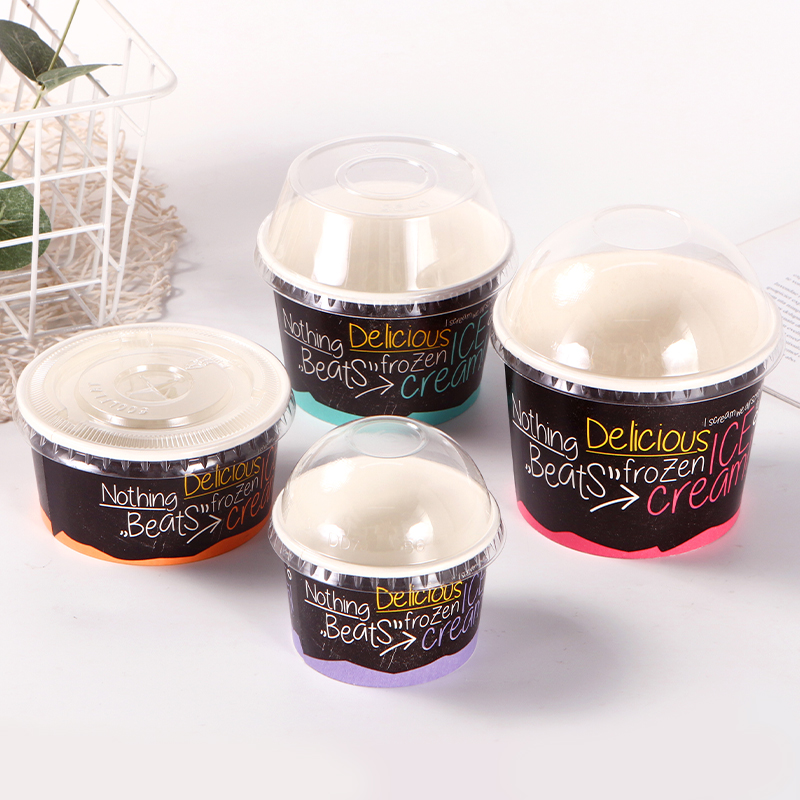
Single-Wall vs Double-Wall Ice Cream Cups
Most ice cream paper cups are single-wall, which is perfectly fine for scoops that are served and eaten quickly. Double-wall cups add an extra layer of paper, which insulates the contents better and keeps the outside from sweating in warm weather. They cost more, so reserve them for larger sizes, outdoor events, or desserts that sit for a while, such as take-home gelato or sundaes with warm toppings.
Lids, Spoons, and Add-Ons That Make the Cup Work Better
A cup alone is rarely enough. Think about the whole serving set, because the wrong lid or spoon can ruin the experience even if the cup is excellent.
Flat lids: good for take-home cups that will not carry tall toppings, and easy to stack in a freezer.
Dome lids: leave space for whipped cream, sprinkles, or a cookie on top, which is ideal for sundaes.
Lids with a spoon slot: handy for delivery orders and events where customers eat on the go.
Wooden or paper spoons: pair naturally with a paper ice cream cup and support an eco-friendly image, but test that they are sturdy enough for hard ice cream.
Cup sleeves and holders: useful for multi-cup orders at festivals or catered parties.
When you order, confirm that the lid diameter matches the cup rim exactly. A lid that is even one millimeter off can pop loose in a delivery bag.
Custom Printed Ice Cream Paper Cups for Branding
Custom ice cream paper cups turn every sale into free advertising. A cup with your logo, shop name, and a simple pattern is much more likely to appear in photos and social media posts. Printing is also a chance to add a social handle or QR code that sends customers to your menu or loyalty page.
What to Prepare Before Ordering
Vector artwork (AI, EPS, or PDF) so the logo prints sharply.
Pantone color references if your brand color has to match exactly.
The cup size and style, since the print area changes with every size.
Your expected monthly volume, because minimum order quantities for custom cups are often several thousand pieces.
Design Tips That Actually Work
Keep designs bold and simple. Ice cream cups are small, and fine details get lost on a curved surface. Use strong contrast, limit the palette to two or three colors, and keep important text away from the seam. Light colors on a pastel background suit gelato and frozen yogurt, while bright, playful graphics work well for kids' menus and summer events.
How to Estimate Cost and Order the Right Quantity
The unit price of a disposable ice cream cup depends on size, wall type, coating, print colors, and order volume. Plain stock cups are cheapest and can usually be bought in small cartons. Custom printed cups cost more per piece, but the price drops sharply as quantity rises. Compare quotes on the same specification, including paper weight (listed in grams per square meter), coating type, and number of print colors, otherwise the prices are not comparable.
To estimate quantity, multiply your average daily servings by the number of days you want to cover, then add 10 to 15 percent for waste, tests, and busy days. For a seasonal business, order enough to cover your peak weeks before shipping delays can become a problem, since lead times for custom print jobs commonly run a few weeks.
Storage and Usage Tips for Paper Ice Cream Cups
Even a great cup can fail if it is stored badly. Keep unused cups in their sealed sleeves in a cool, dry place away from strong odors and direct sunlight. Moisture can weaken the paper and cause stacked cups to stick together. If you pre-fill cups for a rush, place them in the freezer on a flat tray and serve them within the same day, as long freezer storage can make the paper brittle.
For hot toppings such as warm brownies or caramel, check the supplier's temperature rating first. Cups designed for cold use may soften or leak when hot sauce is poured in, so either let toppings cool slightly or choose a double-wall cup rated for it.
Common Mistakes to Avoid When Buying Ice Cream Paper Cups
Choosing only on price and ending up with cups that leak or go soft within minutes.
Ordering a large print run before testing a physical sample.
Forgetting to match lids to cup size, leaving you with unusable stock.
Using a cup that is too large, which makes portions look small and wastes packaging budget.
Skipping food-safety paperwork, which can cause problems with inspections or marketplace listings.
Claiming "100% eco-friendly" without checking the coating and local disposal options.
Final Thoughts on Choosing the Right Ice Cream Paper Cup
The best ice cream paper cup is the one that fits your portions, survives your serving routine, and shows off your brand at a price that makes sense. Start by deciding your sizes, choose a coating that matches your sustainability goals, test samples with real ice cream, and only then commit to a bigger or custom order. A little testing up front means happier customers, fewer leaks, and packaging that works as quietly as a good marketing tool.
Custom Packaging Made Easy
From concept to delivery, our team ensures your custom packaging needs are met with efficient communication and professional service.
-
 01
Briefing
-

-
 02
Material & Structure
-
-
 03
Artwork & Printing
-
-
 04
Sampling
-
-
 05
Testing & Approval
-
-
 06
Production & Delivery
-
-
Suzhou Accum Packaging Co., Ltd.
Contact us
TEL: +86 512 6378 6312 TEL: +86 182 6183 5029 Add: Zhujiabang, Zhenze Town, Wujiang District, Suzhou city, Jiangsu Province, China -
Quick Link
Home Products About Us Solutions News Contact Us -
Products Links
Paper Cup Paper Container Retail Shelf Packaging Paper Tray Paper Bucket Accessory Latest Stainless Bottle -
News
Ice Cream Paper Cup: What Size, Material, and Lid Do You Really Need? Buying Sushi Trays in Bulk? Here’s What to Check Before You Order 8oz Paper Cups: Sizes, Types, Uses & How to Buy the Right Ones -
Mobile
