
 English
 中文简体
 Español


Everything You Need to Know Before Buying 2oz Paper Sauce Cups
If you run a restaurant, food truck, catering business, or even a busy home kitchen, you already know that sauce is half the experience. Ketchup, ranch, sweet chili, melted butter, and dessert dips all need a clean, leak-resistant container. That is where 2oz paper sauce cups come in. They are small, affordable, and easy to stock, but choosing the wrong ones can lead to leaks, soggy walls, and unhappy customers. This guide walks you through what to look for so you buy the right ones the first time.
Content
- 1 What Are 2oz Paper Sauce Cups and Where Are They Used?
- 2 Why Choose Paper Over Plastic for Small Sauce Containers?
- 3 How to Choose the Right 2oz Paper Sauce Cups
- 4 Is 2oz the Right Size for Your Menu?
- 5 Tips for Using 2oz Paper Sauce Cups Without Leaks or Waste
- 6 Buying Tips: Cost, Quantity, and Supplier Questions
- 7 Final Thoughts on Choosing 2oz Paper Sauce Cups
What Are 2oz Paper Sauce Cups and Where Are They Used?
A 2oz paper sauce cup, also sold as a 2 oz paper portion cup, 2-ounce paper condiment cup, or small paper dipping cup, holds about 59 ml of liquid. It is made from food-grade paperboard and usually has a thin coating on the inside that keeps oils and moisture from soaking through. The size is a sweet spot for single-serve dipping: large enough for a satisfying amount of sauce, small enough to keep portion costs under control.
These cups show up in many places. Fast-food restaurants use them for nuggets and fries, pizzerias for garlic dip, sushi shops for soy and spicy mayo, and bakeries for icing or fruit compote samples. Because they are lightweight and stackable, they also work well for takeout and delivery orders where space in the bag is limited.
Common uses at a glance
- Ketchup, mustard, mayonnaise, and BBQ sauce for fries and burgers
- Ranch, blue cheese, and honey mustard for wings and nuggets
- Salad dressings and vinaigrettes packed with to-go salads
- Melted butter, caramel, chocolate, and syrup for desserts
- Free samples, spices, nuts, and toppings at markets and events
Why Choose Paper Over Plastic for Small Sauce Containers?
Many businesses are switching from plastic portion cups to paper because customers notice packaging. Paper cups feel more natural, can be printed with your logo, and are often easier to recycle or compost where facilities exist. Always check whether the specific cup is recyclable or compostable in your area, because the inner coating affects how it can be processed.
Paper also performs well in practical ways. It does not become brittle in the cold like some thin plastics, it resists sliding around in a bag better than slick plastic, and it gives you a larger surface to brand. The trade-off is that paper is less transparent, so customers cannot see the sauce color through the wall. If that matters for your menu, you may want to label lids or use a colored sauce name sticker.
How to Choose the Right 2oz Paper Sauce Cups
Check the lining and coating
The inside coating decides how well the cup handles wet or oily sauces. Polyethylene (PE) coating is the most common and works well for most cold and warm sauces. Water-based or aqueous coatings are often marketed as a more eco-friendly option. If you serve hot sauces such as melted butter or cheese dip, confirm the cup is rated for hot food and for how long it can hold it.
Look at wall thickness and rim design
A thin wall can collapse when a customer squeezes it while dipping. Look for sturdy paperboard and a smooth rolled rim. A good rim also gives a lid something solid to grip, which reduces leaks in delivery bags.
Decide whether you need lids
For dine-in service, open cups are usually fine. For takeout, delivery, or salad dressings, 2oz paper sauce cups with lids are the safer choice. Lids can be paper, PET plastic, or vented, so match the lid to the cup diameter exactly. Buying cups and lids from the same supplier avoids frustrating fit problems.
Quick comparison of common options
| Type | Best For | Things to Watch |
| Plain white paper cup | Ketchup, mustard, dips | Less branding impact |
| Printed paper cup | Branded takeout, events | Higher minimum order |
| PE-coated cup | Oily and wet sauces | Check local recycling rules |
| Aqueous-coated cup | Eco-minded menus | Confirm hot and oil resistance |
| Cup with lid | Delivery, dressings | Lid must match diameter |
Is 2oz the Right Size for Your Menu?
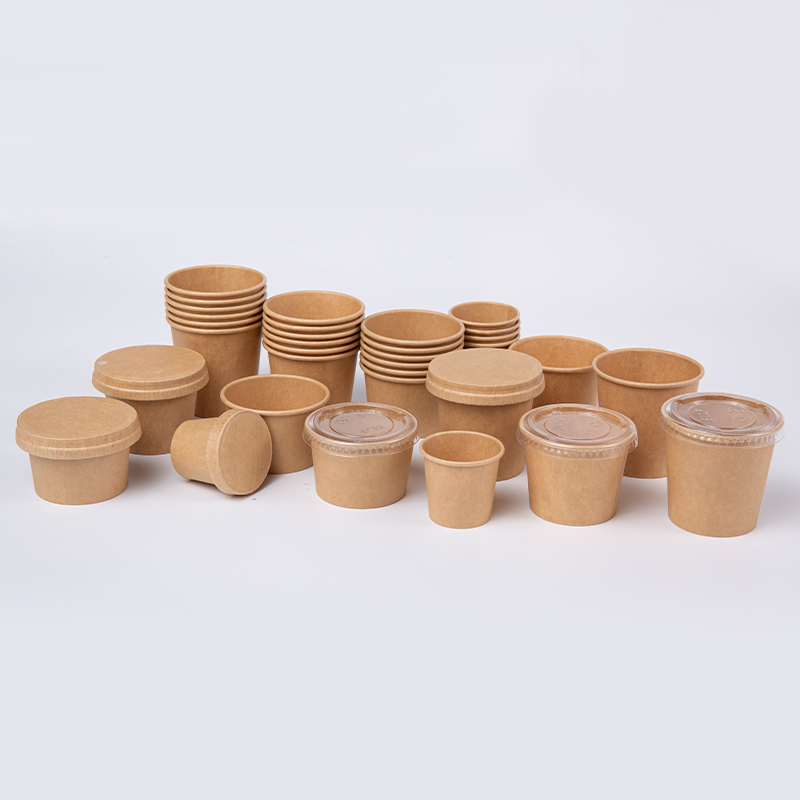
Two ounces works for most single-serve dipping situations, but it is not always the best fit. A small order of fries may only need a 1oz or 1.5oz cup, while a large order of wings can call for a 3.25oz or 4oz container. Think about how much sauce a customer realistically uses, then add a little extra so the cup is not overfilled. Leaving a small gap at the top helps prevent spills when lids are pressed on.
| Cup Size | Approx. Volume | Typical Use |
| 1oz | 30 ml | Samples, spices, small toppings |
| 2oz | 59 ml | Single-serve dips and sauces |
| 3.25oz | 96 ml | Wing sauces, extra dressing |
| 4oz | 118 ml | Shared dips, larger portions |
Tips for Using 2oz Paper Sauce Cups Without Leaks or Waste
Even a high-quality cup can fail if it is used poorly. A few simple habits make a noticeable difference in customer satisfaction and in how much product you throw away.
- Fill to about 80 to 90 percent so the lid sits flat and does not squeeze sauce out.
- Use a portion scoop, squeeze bottle, or pump dispenser for consistent amounts and cleaner rims.
- Wipe any sauce off the rim before closing the lid to help it seal properly.
- Keep cups upright in the delivery bag, ideally in a small tray or dedicated bag section.
- Store unused cups in a dry area, since humidity can soften paperboard over time.
- Pre-fill only what you expect to sell soon, especially for thin or oily sauces.
Buying Tips: Cost, Quantity, and Supplier Questions
Sauce cups are a high-volume item, so small price differences add up quickly. Compare cost per cup rather than cost per case, and confirm whether lids are included or sold separately. Buying in bulk lowers the unit price, but only if you have dry storage space and will use the stock within a reasonable time. If you want custom printing, ask about minimum order quantity, artwork requirements, and lead time before committing.
Questions to ask your supplier
- Is the cup food-grade, and can you provide compliance documents for your market?
- What temperature range is the cup rated for, hot or cold?
- Which lid styles fit, and are they sold in matching quantities?
- Can you order a small sample pack to test with your actual sauces?
- What are the recycling or composting claims, and how are they certified?
Final Thoughts on Choosing 2oz Paper Sauce Cups
The best 2oz paper sauce cups are the ones that match your menu, your service style, and your budget. Start by testing a small batch with your thickest and thinnest sauces, check how they hold up in a delivery bag, and confirm the lids fit snugly. Once you find a cup that stays leak-free and looks good with your brand, reorder with confidence and keep a little extra stock on hand so you never run out during a rush.
Custom Packaging Made Easy
From concept to delivery, our team ensures your custom packaging needs are met with efficient communication and professional service.
-
 01
Briefing
-

-
 02
Material & Structure
-
-
 03
Artwork & Printing
-
-
 04
Sampling
-
-
 05
Testing & Approval
-
-
 06
Production & Delivery
-
-
Suzhou Accum Packaging Co., Ltd.
Contact us
TEL: +86 512 6378 6312 TEL: +86 182 6183 5029 Add: Zhujiabang, Zhenze Town, Wujiang District, Suzhou city, Jiangsu Province, China -
Quick Link
Home Products About Us Solutions News Contact Us -
Products Links
Paper Cup Paper Container Retail Shelf Packaging Paper Tray Paper Bucket Accessory Latest Stainless Bottle -
News
Everything You Need to Know Before Buying 2oz Paper Sauce Cups Warmth for Winter Disposable Frozen Yogurt Cups: How to Pick the Right Ones for Your Shop -
Mobile
