
 English
 中文简体
中文简体 Español

Are You Choosing the Right Hot Paper Cup? A Complete Guide to Materials, Insulation, and Sustainable Options
Content
- 1 What Makes a Hot Paper Cup Different From Other Disposable Cups
- 2 Types of Hot Paper Cups: Wall Construction Explained
- 3 Hot Paper Cup Sizes: A Practical Reference Guide
- 4 Interior Coatings: PE, PLA, and Aqueous — What's the Difference?
- 5 Lids for Hot Paper Cups: Types and Functional Considerations
- 6 Eco-Friendly Hot Paper Cups: Certifications to Look For
- 7 Custom Printed Hot Paper Cups: Branding Opportunities and Minimum Orders
- 8 How to Choose the Right Hot Paper Cup for Your Operation
What Makes a Hot Paper Cup Different From Other Disposable Cups
A hot paper cup is a purpose-engineered single-use container designed specifically to hold hot beverages safely and comfortably. Unlike cold drink cups — which prioritize condensation resistance and are often made from thinner materials — hot paper cups must withstand sustained temperatures typically ranging from 60°C to 90°C (140°F to 194°F) without deforming, leaking, or becoming uncomfortable to hold. This functional requirement shapes every aspect of the cup's construction, from the grammage of the paperboard to the type of interior coating applied.
The defining structural feature of a hot paper cup is its interior moisture and heat barrier. Standard hot cups use a thin layer of polyethylene (PE) laminated to the inside of the paperboard, which prevents the hot liquid from saturating and weakening the paper walls. More advanced and environmentally focused variants use PLA (polylactic acid) coatings or aqueous barriers that serve the same functional purpose while offering improved end-of-life recyclability or compostability. The exterior of the cup is typically printed, left natural kraft, or wrapped in an additional insulating layer — depending on whether the cup is a single-wall, double-wall, or ripple-wall design.
For coffee shops, cafes, hotel breakfast services, vending operations, and event catering, choosing the right hot paper cup is a decision that affects customer experience, operational efficiency, brand perception, and environmental footprint simultaneously. Understanding the distinctions between available formats is therefore essential, not optional.
Types of Hot Paper Cups: Wall Construction Explained
The wall construction of a hot paper cup is its most consequential design characteristic. It determines how well the cup insulates, how comfortable it is to hold, and what it costs. There are three primary formats available commercially, each suited to different operational and customer experience contexts.
Single Wall Hot Paper Cups
Single wall cups consist of a single layer of paperboard with an interior heat-resistant coating. They are the most economical option and are widely used in high-volume, fast-turnover settings such as vending machines, office coffee stations, canteens, and quick-service restaurants. Because the outer wall transfers heat readily, single wall cups are typically used with a corrugated cardboard sleeve or a separate cup holder to protect the customer's hand from the heat of the beverage. Without a sleeve, they can become uncomfortably hot when filled with drinks above 70°C. Their lower cost-per-unit makes them the dominant choice for bulk purchasing where sleeve distribution is manageable.
Double Wall Hot Paper Cups
Double wall cups feature two concentric layers of paperboard with an air gap between them. This trapped air acts as an insulating buffer, significantly reducing the external surface temperature and making the cup comfortable to hold bare-handed without a sleeve. The double wall construction also improves heat retention, keeping beverages warmer for longer — a feature increasingly valued by customers who commute or walk with their drinks. Double wall hot cups cost more per unit than single wall versions but eliminate the need for sleeves, often resulting in a comparable or lower total cost-per-serve. They are the preferred format for specialty coffee shops and premium beverage brands where tactile quality contributes to the overall customer experience.
Ripple Wall Hot Paper Cups
Ripple wall cups feature a distinctive corrugated outer layer bonded to a smooth inner cup, creating a ribbed texture that provides excellent grip and insulation simultaneously. The corrugated structure maximizes the air pocket between the hand and the hot liquid, offering the best hand-feel insulation of the three formats. Ripple cups have a strong visual identity and are popular in artisan coffee shops, bakeries, and premium food service environments where tactile aesthetics are important. They are slightly bulkier than smooth double wall cups and require more storage space per unit, but their distinctive appearance and superior grip make them a favorite for on-the-go consumption.
Hot Paper Cup Sizes: A Practical Reference Guide
Hot paper cups are produced in a range of standardized sizes designed to accommodate the most common hot beverage formats served globally. Selecting the correct size is important not just for portion accuracy but also for lid compatibility — a mismatch between cup diameter and lid specification is one of the most common sourcing errors in food service operations.
|
Cup Size |
Volume |
Common Beverage Use |
Typical Setting |
|
4 oz |
~120 ml |
Espresso, macchiato, sample shots |
Specialty coffee bars, tasting events |
|
8 oz |
~240 ml |
Small coffee, flat white, short tea |
Cafes, offices, hotels |
|
12 oz |
~355 ml |
Regular latte, cappuccino, tea |
Coffee shops, quick-service restaurants |
|
16 oz |
~475 ml |
Large latte, hot chocolate, brewed coffee |
Takeaway counters, drive-throughs |
|
20 oz |
~590 ml |
Extra-large coffee, soup, hot noodles |
Convenience stores, stadium catering |
It is important to note that cup sizes are not universally standardized across manufacturers. Two different suppliers' "12 oz" cups may have slightly different rim diameters, affecting lid interchangeability. Always verify the rim diameter in millimeters when sourcing cups and lids from different suppliers to ensure compatibility, and request physical samples before committing to large orders.
Interior Coatings: PE, PLA, and Aqueous — What's the Difference?
The interior coating of a hot paper cup is invisible to the end user but profoundly important in determining the cup's performance, recyclability, and environmental credentials. Each coating type carries distinct advantages and limitations that buyers must weigh against their operational requirements and sustainability commitments.
Polyethylene (PE) Coating
PE-coated hot paper cups have been the industry standard for decades. The polyethylene lining provides excellent moisture and heat resistance, is cost-effective to apply during manufacturing, and performs reliably across the full range of hot beverage temperatures. The significant drawback is environmental: the plastic-paper bond in PE-coated cups makes them difficult to recycle through standard paper recycling streams, as specialized de-coating equipment is required. While dedicated hot cup recycling programs exist in some countries, the majority of PE-coated cups still end up in landfill. For operations with strong sustainability mandates, PE-coated cups are increasingly difficult to justify.
PLA (Polylactic Acid) Coating
PLA is a bioplastic derived from renewable plant starch — typically corn or sugarcane — that can be used as a drop-in replacement for PE in cup manufacturing. PLA-coated hot paper cups look and perform similarly to PE-coated versions in normal use but are certified compostable under industrial composting conditions, breaking down into carbon dioxide, water, and biomass within 90 to 180 days when processed correctly. A critical limitation is that PLA composting requires industrial composting facilities operating at sustained high temperatures — home composting is not generally effective. PLA cups must also be clearly labeled and sorted correctly to reach composting facilities rather than contaminating paper recycling streams.
Aqueous (Water-Based) Coating
Aqueous coatings apply a water-based barrier to the paper surface rather than a plastic film, resulting in a cup that is significantly more compatible with standard paper recycling infrastructure. Some aqueous-coated cups are accepted in mainstream paper recycling streams without specialized processing, making them one of the most practically recyclable hot cup formats available today. Heat resistance is slightly lower than PE or PLA coatings, so these cups are best suited to beverages served below 80°C. For cafes and offices where recycling compliance is a priority and beverage temperatures are moderate, aqueous-coated hot cups represent an excellent balance of functionality and end-of-life performance.
Lids for Hot Paper Cups: Types and Functional Considerations
A hot paper cup without an appropriate lid is incomplete for most takeaway and on-the-go applications. Lids manage heat retention, prevent spills, and influence the drinking experience. The choice of lid type should be made concurrently with cup selection, not as an afterthought.
- Sip-Through Lids: The most common lid format for hot cups, featuring a small pre-formed drinking aperture that allows the customer to sip without removing the lid. These provide good spill resistance and heat retention, and are widely available in PS (polystyrene), PP (polypropylene), and increasingly in PLA or recycled PET for eco-conscious operators.
- Fold-Back Tab Lids: A variation of the sip-through lid with a hinged or fold-back tab that covers the drinking hole when not in use, providing additional spill protection during transport. Popular for drive-through and delivery formats where cups spend extended time in cup holders.
- Flat or Dome Lids: Used for beverages with foam topping or whipped cream additions (cappuccinos, hot chocolates), dome lids provide a larger internal clearance that protects the presentation of the drink above the cup rim.
- Paper Lids: An emerging category driven by the push to eliminate plastic entirely, paper lids use multi-layered paperboard construction with a drinking aperture. While not yet as widespread as plastic lids, several major coffee chains have piloted paper lid programs successfully, and availability is growing rapidly.
- Vented Lids: Feature a small vent hole opposite the drinking aperture to allow air flow, reducing vacuum pressure and making it easier to drink without the beverage surging. Common in the US market and increasingly adopted globally for large-format hot cups.
Eco-Friendly Hot Paper Cups: Certifications to Look For
The market for eco-friendly hot paper cups has grown rapidly, but so has the prevalence of vague or unsubstantiated environmental claims. Buyers seeking genuinely sustainable hot cups should look for independently verified certifications rather than relying on manufacturer marketing language alone.
- BPI Certification (Biodegradable Products Institute): A North American certification program that independently verifies compostability claims for packaging products. BPI-certified hot paper cups have been tested and confirmed to compost correctly in industrial composting conditions.
- DIN CERTCO / TÜV Austria OK Compost: European equivalents to BPI certification, widely recognized in the EU and globally. The OK Compost Industrial and OK Compost HOME marks distinguish between products suitable for industrial versus home composting.
- FSC Certification (Forest Stewardship Council): Certifies that the paperboard used in cup manufacturing originates from responsibly managed forests. FSC-certified hot cups ensure that the raw material sourcing does not contribute to deforestation or habitat destruction.
- PEFC Certification: An alternative to FSC, the Programme for the Endorsement of Forest Certification covers sustainable forest management across a broader geographic range and is widely recognized in European paper supply chains.
- Seedling Logo (EN 13432 Compliance): The European standard for compostable packaging. Products bearing the Seedling logo have been tested against EN 13432, confirming they meet specific criteria for biodegradability, disintegration, and absence of harmful substances.
Custom Printed Hot Paper Cups: Branding Opportunities and Minimum Orders
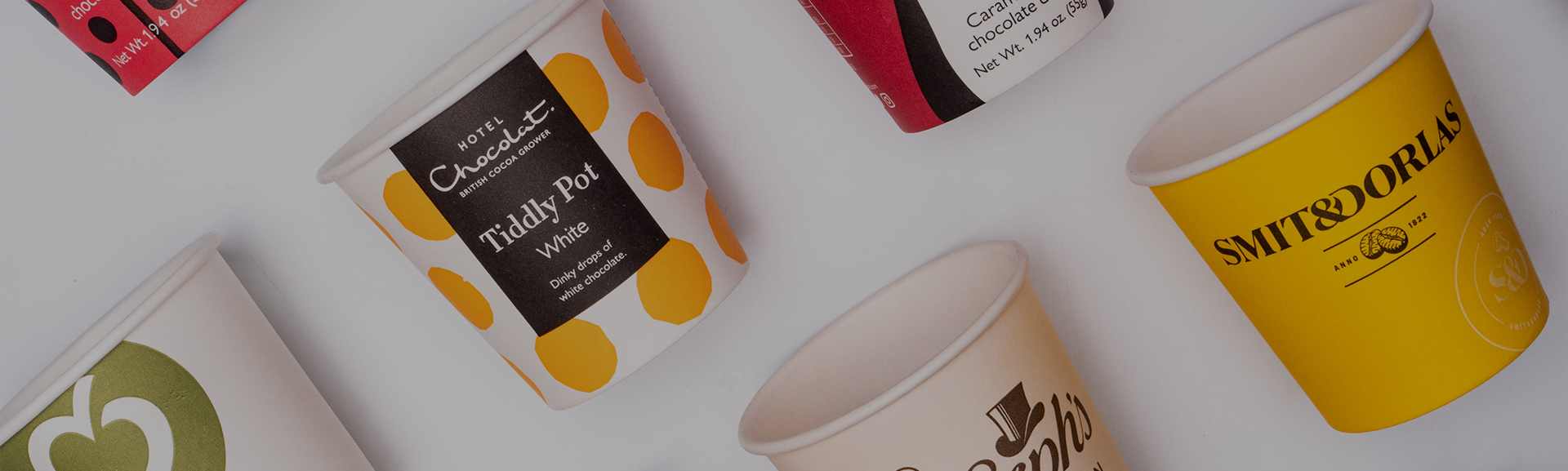
For coffee shops, hotel chains, corporate catering companies, and food service franchises, custom printed hot paper cups represent a high-visibility branding opportunity that travels with the customer beyond the point of sale. A cup carried through a busy city street or office building functions as a mobile advertisement, reinforcing brand recognition with every person who sees it.
Modern cup printing technology allows for high-resolution graphics, multiple Pantone colors, gradient effects, and full-wrap designs that cover the entire exterior surface of the cup. Food-safe inks are applied before the cup is formed, ensuring print quality is not compromised by the manufacturing process. Matte, gloss, and soft-touch finish options are available from many suppliers, allowing brand designers to specify a tactile quality that aligns with the overall brand identity.
Minimum order quantities for custom printed hot paper cups typically start at 5,000 to 10,000 units per size for standard flexographic printing, with digital printing options sometimes available at lower minimums of 1,000 to 2,000 units — though at a higher per-unit cost. Lead times range from two to six weeks depending on the supplier's production capacity and the complexity of the artwork. Businesses considering custom cups for the first time should factor sample approval time into their planning, as color matching and print registration often require one to two revision rounds before a final proof is approved.
How to Choose the Right Hot Paper Cup for Your Operation
With so many variables in play — wall type, coating, size, lid format, certification, and branding — selecting the optimal hot paper cup for a specific operation requires a structured evaluation process. Working through the following considerations systematically will help narrow the field to a shortlist of genuinely suitable options.
- Assess Your Beverage Temperature Range: If you regularly serve beverages above 80°C, ensure the cup's interior coating is rated for those temperatures. PLA and PE coatings generally handle higher temperatures than aqueous alternatives, so verify the supplier's temperature specification before purchasing.
- Evaluate the Need for Sleeves: If your customers frequently walk with their drinks, double wall or ripple wall cups eliminate sleeve requirements and improve the hand-feel experience. If your service model is primarily sit-in or short-duration takeaway, single wall cups with sleeves may offer a more cost-effective solution.
- Align with Your Waste Management Infrastructure: Match the cup's end-of-life format to the waste streams your customers and facilities can actually access. A compostable PLA cup is only beneficial if customers have access to industrial composting — otherwise it provides no practical advantage over a PE-coated alternative.
- Confirm Lid Compatibility Before Ordering: Always request lid samples alongside cup samples and test the fit under realistic service conditions. Ask the supplier for the exact rim diameter specification in millimeters and cross-reference with your preferred lid supplier's corresponding size.
- Request Independently Verified Certifications: Do not accept marketing claims about compostability or sustainability without requesting the relevant third-party certification documents. Legitimate suppliers will readily provide BPI, DIN CERTCO, FSC, or equivalent documentation upon request.
- Calculate Total Cost-Per-Serve: Compare the true cost per serve across formats by factoring in sleeve costs, lid costs, and storage space requirements — not just the cup unit price. A double wall cup that costs more per unit but eliminates sleeve costs and storage space may represent better overall value than a cheaper single wall alternative.
Custom Packaging Made Easy
From concept to delivery, our team ensures your custom packaging needs are met with efficient communication and professional service.
-
 01
01
Briefing
-

-
 02
02
Material & Structure
-
-
 03
03
Artwork & Printing
-
-
 04
04
Sampling
-
-
 05
05
Testing & Approval
-
-
 06
06
Production & Delivery
-
-
Suzhou Accum Packaging Co., Ltd.
Contact us
TEL: +86 512 6378 6312 TEL: +86 182 6183 5029 Add: Zhujiabang, Zhenze Town, Wujiang District, Suzhou city, Jiangsu Province, China -
Quick Link
Home Products About Us Solutions News Contact Us -
Products Links
Paper Cup Paper Container Retail Shelf Packaging Paper Tray Paper Bucket Accessory Latest Stainless Bottle -
News
The Complete Round Paper Bowl Buying Guide for Home and Business Use Paper Cup Holder: How to Pick the Right One Without the Guesswork Why Does My Paper Straw Get Soggy So Fast? (And Other Paper Straw Questions Answered) -
Mobile
