

 English
 中文简体
中文简体 Español




INDUSTRY KNOWLEDGE
How Ripple Patterns Influence Heat Insulation Efficiency
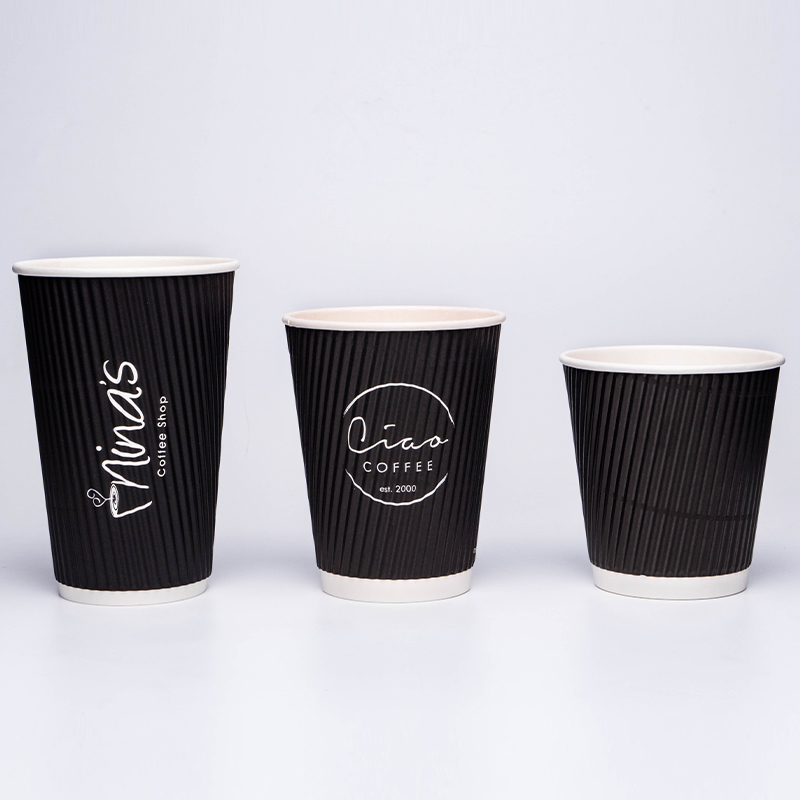
Ripple wall paper cups rely not only on the thickness of the paper but also on the geometry of the ripple pattern to enhance heat protection. The height, spacing, and curvature of each ripple determine how much air is trapped between layers, and this air layer is what significantly reduces heat transfer. Taller, more pronounced ripples create a stronger insulating barrier, while tighter wave spacing provides a firmer grip. Manufacturers often experiment with custom rib designs to balance heat protection, cup strength, and printing feasibility.
Improving Anti-Slip Performance Through Surface Engineering
Ripple wall cups naturally offer a textured grip, but anti-slip performance can be improved through specialized embossing or multi-layer lamination techniques. Some brands incorporate micro-textures between ripple layers to increase friction and prevent hand slippage, especially when users hold the cup with gloves or wet hands. This enhanced grip is valuable in fast-service environments where speed and safety matter. Engineers often test friction coefficients across different surface temperatures to ensure performance consistency.
Balancing Cushioning Effect and Structural Strength
Ripple wall cups absorb some degree of external pressure due to their flexible outer layer, which acts as cushioning. However, excessive flexibility may compromise the cup's vertical load-bearing strength. To counter this, manufacturers adjust ripple density, use higher GSM outer paper, or apply stronger adhesives during lamination. Achieving the right balance ensures cups maintain shape during stacking, transport, and filling, even with temperatures above 90°C.
Material Combinations Used for Ripple Wall Construction
Ripple wall paper cups use a multi-layer structure typically involving an inner food-contact cup and an external corrugated wrap. While virgin fiber paperboard is common for the inner layer, the outer ripple wall may utilize recycled fiber blends to improve sustainability without affecting food safety. Different combinations of coatings, adhesives, and paper qualities lead to varied characteristics such as stiffness, printability, and temperature resistance. Below is a simplified comparison of commonly used materials.
| Component | Typical Material | Key Advantages |
| Inner Cup | Virgin Food-Grade Paper + PE or Water-Based Coating | Safe for hot liquids, high sealing integrity |
| Ripple Layer | Recycled or Mixed Fiber Paper | Improved sustainability, good cushioning |
| Outer Wrap | Coated or Uncoated Paper | Enhanced printability, improved tactile feel |
Optimizing Ripple Wall Cups for Automated Vending Machines
Ripple wall cups are increasingly used in beverage vending systems, but their corrugated surfaces may introduce challenges with stacking, cup separation, and downward dispensing. To ensure compatibility, manufacturers fine-tune outer wall height, rim tolerances, and surface smoothness. Anti-jamming tests simulate thousands of dispensing cycles to measure stack stability under vibration and temperature changes. Some automated systems even require reinforced upper rims to prevent warping during storage in heated compartments.
Advanced Printing Approaches for Corrugated Surfaces
Printing on ripple wall cups is more complex than printing on flat surfaces because the corrugated layer can distort artwork or reduce sharpness. To address this, producers may print the design on a flat sheet before it is formed into ripples, ensuring color consistency and clarity. UV-flexo and water-based flexographic printing are common choices due to their strong adhesion and fast curing. Brands with detailed patterns or gradient-heavy graphics often rely on pre-lamination printing to maintain premium visual effect on the final cup.
Sustainability Considerations When Choosing Ripple Wall Cups
Ripple wall cups can offer a more eco-friendly alternative when produced with responsibly sourced fibers and low-impact coatings. Buyers increasingly request FSC-certified paper and water-based lamination to reduce reliance on traditional PE coatings. Additionally, lightweighting strategies—such as optimizing ripple height or using high-strength fibers—can reduce total paper usage without sacrificing performance. The layered construction also allows manufacturers to incorporate recycled materials into the outer wrap while keeping the inner cup food-safe.


