
 English
 中文简体
中文简体 Español

Why Are Paper Soup Containers Becoming Essential in Today’s Take-Away Food Business?
The way people consume food has changed significantly over the past few years, and the paper soup container has become one of the most important packaging solutions supporting this shift. Especially during the global pandemic and periods of mass quarantine, disposable take-away containers played a crucial role in keeping food businesses operating while ensuring safety, hygiene, and convenience. Among them, paper soup containers stood out for their versatility, reliability, and adaptability to different food types.
Even today, many consumers still prefer ordering take-away food rather than dining in, driven by habits formed during the pandemic, concerns about social distance, and heightened awareness of sanitation. As a result, the demand for high-quality paper soup containers remains strong across restaurants, cafes, food delivery platforms, and catering services.
Content
Why Paper Soup Containers Are Widely Used
Paper soup containers are specifically designed to hold liquid and semi-liquid foods without leakage or deformation. Unlike ordinary paper bowls, they are made with food-grade paperboard and coated with a moisture- and grease-resistant lining. This structure allows them to safely contain hot soup, porridge, curry, noodles, and stews, as well as cold items such as ice cream or chilled desserts.
Their popularity in the take-away food business is mainly due to several practical advantages:
Excellent heat resistancefor hot foods
Leak-proof performanceduring transport
Lightweight yet sturdy structure
Disposable and hygienic, reducing cross-contamination risks
For busy take-away operations, these features help maintain food quality from kitchen to customer.
Suitable for Both Hot and Cold Foods
One of the key strengths of the paper soup container is its versatility. It can be used for a wide range of foods under different temperature conditions:
Hot foods: soup, porridge, ramen, pho, chili, oatmeal
Warm snacks: nuts, grains, side dishes
Cold foods: ice cream, yogurt, fruit bowls
Based on how long the food needs to stay inside the container and whether it is served hot or cold, different material structures and coating types can be selected. This flexibility allows suppliers to offer customized solutions that match specific business needs.
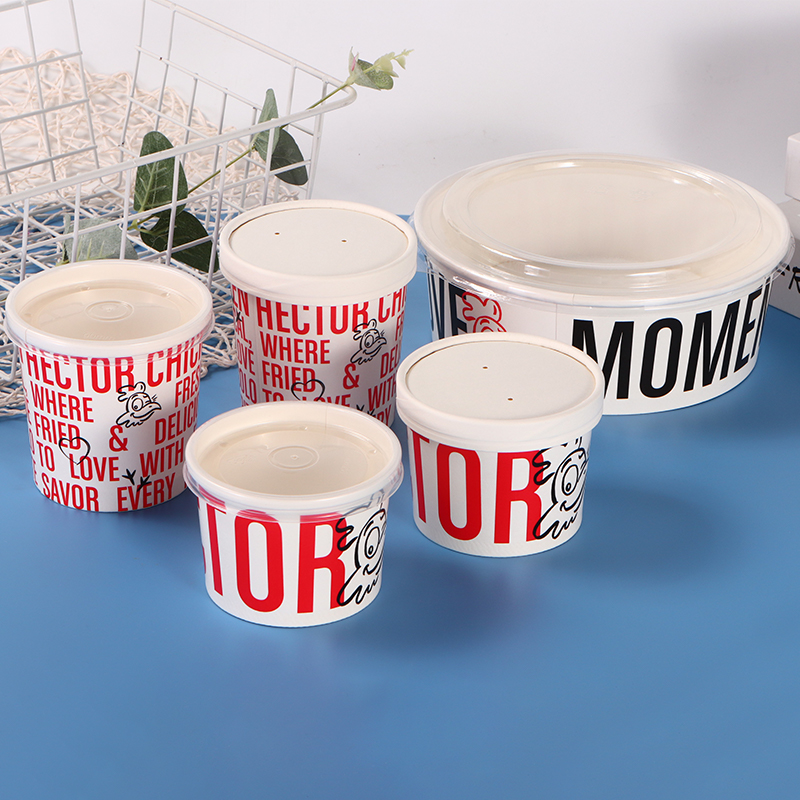
Material and Size Selection Matters
Choosing the right paper soup container is not only about appearance, but also about performance. Factors such as serving temperature, delivery time, and portion size all influence the ideal choice.
Material options: Single-wall, double-wall, or enhanced coated paper for extended heat retention
Capacity options: Common sizes range from small portions to large family servings
Use scenarios: Short-distance delivery, long delivery time, or immediate consumption
By matching material and size to the actual use conditions, food businesses can improve customer satisfaction while controlling packaging costs.
Lid Options for Take-Away Convenience
For take-away service, lids are just as important as the container itself. Paper soup containers can be paired with either plastic lids or paper lids, depending on the application.
Vented paper lids are particularly popular for hot foods. Their design helps preserve heat while allowing steam to escape, preventing condensation that can affect food texture or cause leakage. In addition, paper lids offer an excellent surface for customized printing, including brand logos, patterns, or promotional messages. The edge and surface can be tailored to reflect a brand’s identity, enhancing recognition and customer experience.
Plastic lids, on the other hand, provide strong sealing performance and visibility, making them suitable for certain delivery scenarios or cold food applications.
Supporting Branding and Sustainability Goals
Beyond functionality, paper soup containers also support branding and environmental positioning. Custom printing on both containers and lids allows businesses to communicate professionalism and consistency. At the same time, paper-based packaging aligns with the growing consumer preference for more sustainable and eco-friendly options compared to fully plastic alternatives.
A Packaging Solution That Continues to Matter
From the height of the pandemic to today’s evolving take-away culture, paper soup containers have proven to be more than just disposable packaging. They are a practical, adaptable, and essential tool for modern food service operations. With the ability to serve both hot and cold foods, multiple lid options, and customizable designs, paper soup containers will continue to play a key role in meeting consumer expectations for safety, convenience, and quality.
Custom Packaging Made Easy
From concept to delivery, our team ensures your custom packaging needs are met with efficient communication and professional service.
-
 01
01
Briefing
-

-
 02
02
Material & Structure
-
-
 03
03
Artwork & Printing
-
-
 04
04
Sampling
-
-
 05
05
Testing & Approval
-
-
 06
06
Production & Delivery
-
-
Suzhou Accum Packaging Co., Ltd.
Contact us
TEL: +86 512 6378 6312 TEL: +86 182 6183 5029 Add: Zhujiabang, Zhenze Town, Wujiang District, Suzhou city, Jiangsu Province, China -
Quick Link
Home Products About Us Solutions News Contact Us -
Products Links
Paper Cup Paper Container Retail Shelf Packaging Paper Tray Paper Bucket Accessory Latest Stainless Bottle -
News
The Complete Round Paper Bowl Buying Guide for Home and Business Use Paper Cup Holder: How to Pick the Right One Without the Guesswork Why Does My Paper Straw Get Soggy So Fast? (And Other Paper Straw Questions Answered) -
Mobile
