

 English
 中文简体
中文简体 Español




INDUSTRY KNOWLEDGE
Understanding Wood Density and Cutlery Strength
The strength and durability of our wooden cutlery, ensuring each wooden knife, wooden fork, and wooden spoon is sturdy, are directly related to the density and grain structure of the source wood. Higher density woods, characterized by closely packed cell structures, inherently offer greater resistance to bending, breaking, and moisture absorption. For disposable wooden tableware, materials like birchwood are often favored for their balance of high strength, fine grain, and sustainable availability. A tight, uniform grain minimizes weak points, which is a critical quality control point we watch from log cutting to polishing. Wood's natural flexibility, unlike rigid plastics, allows it to withstand moderate stress before fracturing, making it a safer and more reliable option for various food types, hot or cold. This focus on material integrity is what makes our cutlery the most cost-effective alternative to plastic cutlery.
Optimizing Heat Treatment for Food Safety and Hygiene
Before shaping, the wood undergoes a crucial heat treatment process, often involving boiling or steaming. This is not just to soften the wood for easier peeling and subsequent die-cutting; it’s a vital step for enhancing the cutlery's final properties and ensuring it is sleek and safe to use. The heat treatment sterilizes the material, reducing the microbial load and making the final product food-safe. Furthermore, this process stabilizes the wood, significantly lowering its moisture content. Reduced moisture content is essential for two reasons: it inhibits the potential for mold and bacterial growth, and it minimizes the wood's tendency to warp or crack as it dries, which is especially important for maintaining the shape and integrity of the tines on a wooden fork. We deeply understand this critical quality control point.
The Role of Polishing in Usability and Feel
The final polishing stage is perhaps the most significant step impacting the user experience of our organic and natural woods cutlery. A high-quality polish is what transforms a rough piece of wood into a smooth, comfortable utensil. This process removes fine fibers and splinters, resulting in a perfectly smooth surface that is pleasant to hold and use in the mouth. The degree of polishing also plays a role in minimizing food adhesion; a smoother surface means less food residue sticks to the cutlery, making for a cleaner eating experience. Different polishing techniques, such as tumble polishing or sanding with very fine grit, are employed to achieve this sleek finish while maintaining the wood's natural, uncoated characteristic. This meticulous attention ensures a superior feel, regardless of whether you choose bulk packing or a wooden cutlery set packing.
Selecting the Right Packaging for Different Use Cases
Packaging choices for wooden cutlery are not merely about presentation but are a practical consideration based on the intended use. We offer various packaging based on different uses to meet distinct market needs, optimizing for convenience, hygiene, and cost efficiency. The main options, from bulk packing to single packing, serve different purposes:
- Bulk Packing: This is the most economical format, typically used for large-scale catering operations, commissaries, or institutional settings where cost and volume are the primary factors. Cutlery is often nested or stacked to minimize package size.
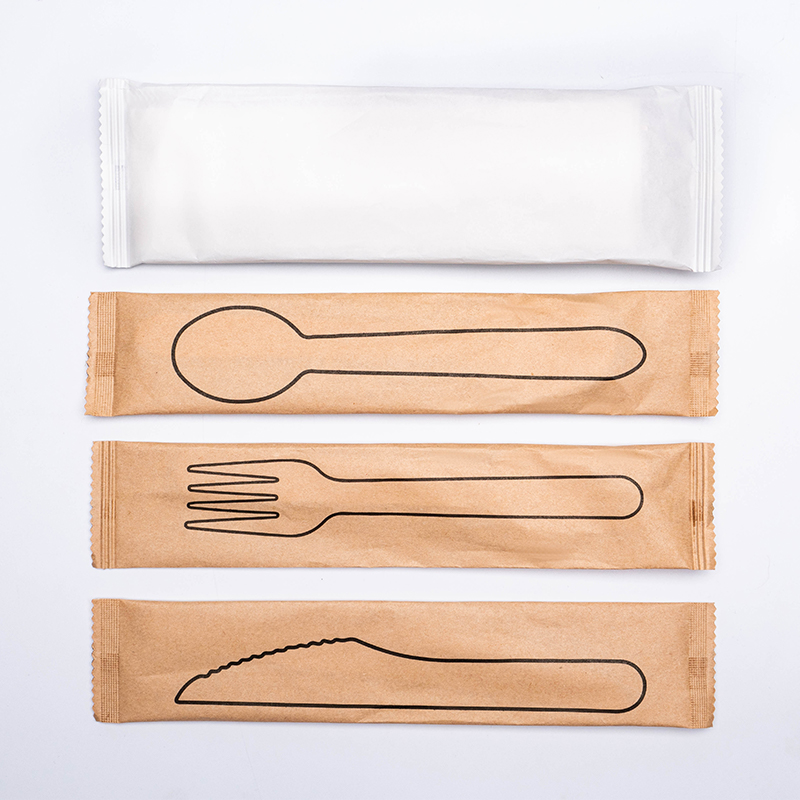
- Single Packing: Essential for high-hygiene environments, grab-and-go meal kits, and delivery services. Each piece is hygienically sealed, often with a napkin or condiment included, which significantly enhances the perception of a safe to use product.
- Wooden Cutlery Set Packing: This option groups a wooden knife, wooden fork, and wooden spoon—and sometimes a napkin—into a single wrapped bundle. It is ideal for pre-portioning for events, picnics, and high-end takeout where a complete, attractive, and sturdy set is required.
Comparing Wooden Cutlery to Biodegradable Plastic Alternatives
While many alternatives to traditional plastic exist, natural wood offers unique benefits over many so-called biodegradable or compostable plastics (like PLA or CPLA). Understanding the distinctions helps us confidently position our cutlery as the superior and most cost-effective alternative to plastic cutlery.
Key Differences in Disposal
True wooden tableware products are inherently compostable in virtually any environment, including backyard piles. Many biodegradable plastics, particularly PLA, often require commercial composting facilities with high, sustained temperatures to break down effectively, meaning they often end up in landfills if the proper infrastructure is unavailable. Our organic and natural woods cutlery naturally returns to the earth without specialized processing.
Performance and Feel Comparison
| Characteristic | Natural Wood Cutlery | Biodegradable Plastic (e.g., PLA) |
| Heat Tolerance | Excellent; handles boiling water and hot foods without warping. | Poor (PLA softens quickly with hot food); CPLA is better but more expensive. |
| Source Material | Renewable resource (trees); minimal processing. | Plant-derived starches (corn, sugarcane); requires industrial chemical processing. |
| Mouth Feel | Smooth, natural, and warm. | Can have a slightly brittle, "plastic-like" texture. |


