

 English
 中文简体
中文简体 Español





INDUSTRY KNOWLEDGE
Exploring the Thermal Dynamics of Cup Sleeves
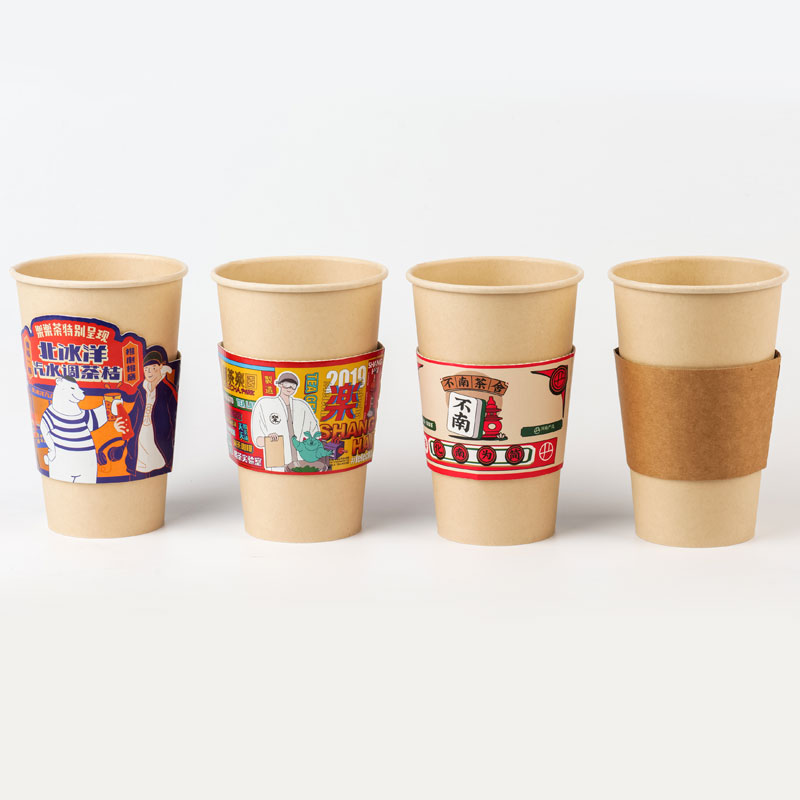
The fundamental purpose of a paper cup sleeve is thermal insulation, primarily achieved by creating an air gap between the hot cup surface and the sleeve itself, combined with the low thermal conductivity of the paperboard material. The insulating performance is significantly influenced by the sleeve's corrugated or textured surface design. For example, a sleeve with an S-shaped corrugation or embossed pattern increases the overall surface area and traps more air, enhancing the effective thermal resistance. This small design detail is crucial for consumer comfort. We ensure our sleeves offer superior thermal protection, keeping hands safe and comfortable.
The Role of Material Density and Caliper
Beyond the physical structure, the choice of paperboard material is critical. Higher caliper (thickness) naturally provides better insulation, but density plays an equally important role. A lower-density paperboard, which contains more trapped air pockets within its fiber matrix, will have a lower thermal diffusivity, meaning heat travels through it more slowly. Materials like post-consumer recycled fiber often exhibit this characteristic, balancing sustainability with performance. Specifying the precise GSM (grams per square meter) and caliper for a sleeve is a technical decision that directly impacts its real-world utility.
Optimizing Print and Coating for Durability
While a sleeve's primary function is insulation, its visual appeal and durability are vital. Printing on sleeve material, typically kraft or solid bleached sulfate (SBS) board, requires careful consideration of ink and coating compatibility. Water-based inks are often favored for their rapid drying time and eco-friendliness. For colored sleeves, the board's natural color affects the final print appearance—printing on brown kraft requires a higher opacity white under-base to achieve true color representation. **Let us handle the complexity of high-fidelity printing so your brand shines brightly.
Selecting the Right Finish and Adhesion
A final varnish or coating not only protects the printed graphics from moisture and abrasion but can also affect the sleeve's friction, which is key to preventing the cup from slipping. Matte coatings offer a sophisticated look but can be slightly less durable than a gloss finish. The adhesive used for the seam of the sleeve must be food-safe, high-tack, and fast-setting. PVA (polyvinyl acetate) glues are standard, but the bond strength must withstand the stress of rapid application by automated sleeve machines and the high heat of a freshly poured beverage.
Standard Sleeve Sizing and Compatibility
Sleeve manufacturing relies on tight tolerance to ensure compatibility across various cup sizes and brand standards. Since cups taper, a sleeve designed for a 12oz cup often works for a 16oz cup from the same product line, but not necessarily a 20oz. The two primary measurements are the top diameter and the bottom diameter of the sleeve's finished form. Variations in cup lip thickness and base diameter across cup manufacturers necessitate a flexible, yet precise, sleeve design. We adhere to industry standards to guarantee a perfect fit every time.
A key consideration in sleeve design is the paperboard cutting die, which determines the sleeve's flat dimensions. The geometry must account for the material's slight stretch and give during the conical forming process. Improper die design can lead to sleeves that are too tight, causing cups to crumple, or too loose, leading to slippage. The table below illustrates common correlations between standard cup volumes and sleeve fitment, though exact dimensions can vary:
| Cup Volume (oz) | Typical Sleeve Fitment Range | Common Board Caliper (pt/microns) |
| 8-12 | Small/Medium | 12-14 pt (305-356 microns) |
| 16-20 | Medium/Large | 14-16 pt (356-406 microns) |
| 24 | Extra Large | 16 pt+ (406 microns) |
Disposing of Sleeves and Regulatory Compliance
The recyclability and compostability of paper cup sleeves are increasingly important to consumers and regulations. Since most sleeves are made from virgin or high-quality recycled paperboard, they are readily recyclable in most municipal paper streams. The critical factor that affects disposal is the adhesive. Pure paper-based adhesives or hot-melt glues are generally accepted, while excessive plastic or wax coatings would compromise the material's ability to be repulped. We are committed to sustainable practices.
For sleeves to be certified as commercially compostable, they must meet standards such as ASTM D6400 (US) or EN 13432 (Europe). This typically requires using specific non-plastic-based coatings, or no coating at all, and certified compostable inks and glues. Specifying a sleeve that is certified compostable requires attention to every single component:
- The paperboard must be unbleached or processed with a chlorine-free method.
- The inks must be heavy metal-free and vegetable-based.
- The adhesive must be certified as compostable, often a natural starch or polymer blend.


